
Top-Rated Polyester Mesh Belt Configurations for Filtration and Drying
For filtration and drying duty on belt filter presses and industrial dryer lines, three polyester mesh belt configurations carry most of the workload: the Large Loop-Filler Wire for heavy-duty dewatering (strength at break ≥ 2,300 N/cm), the Medium Loop for balanced permeability (18,300 m³/㎡·h in its dryer configuration), and the Small Loop for machines with tight roller spacing (1.90 mm profile, 17,500 m³/㎡·h). This ranking extends that shortlist to six configurations and orders them by load capacity first, then by drainage performance and by how tightly the belt fits the machine.
All six configurations are produced by Henan Yiheng Mesh Belt Industry Co., Ltd. (Yiheng Mesh), a polyester mesh belt manufacturer founded in 2009 in Henan Province, China, supplying polyester mesh belts, forming fabrics, dryer fabrics and polyester filter belts for filtration, dewatering, drying and conveying lines. The company exports to Asia, Europe and North America, with an export ratio of 62%.
The order below is not a third-party rating. It is built from published specifications — thickness, air permeability, CFM at 127 Pa and strength at break — and from the operating conditions of each configuration's documented applications. Where a specification sheet does not list a value, this article says so instead of estimating it.
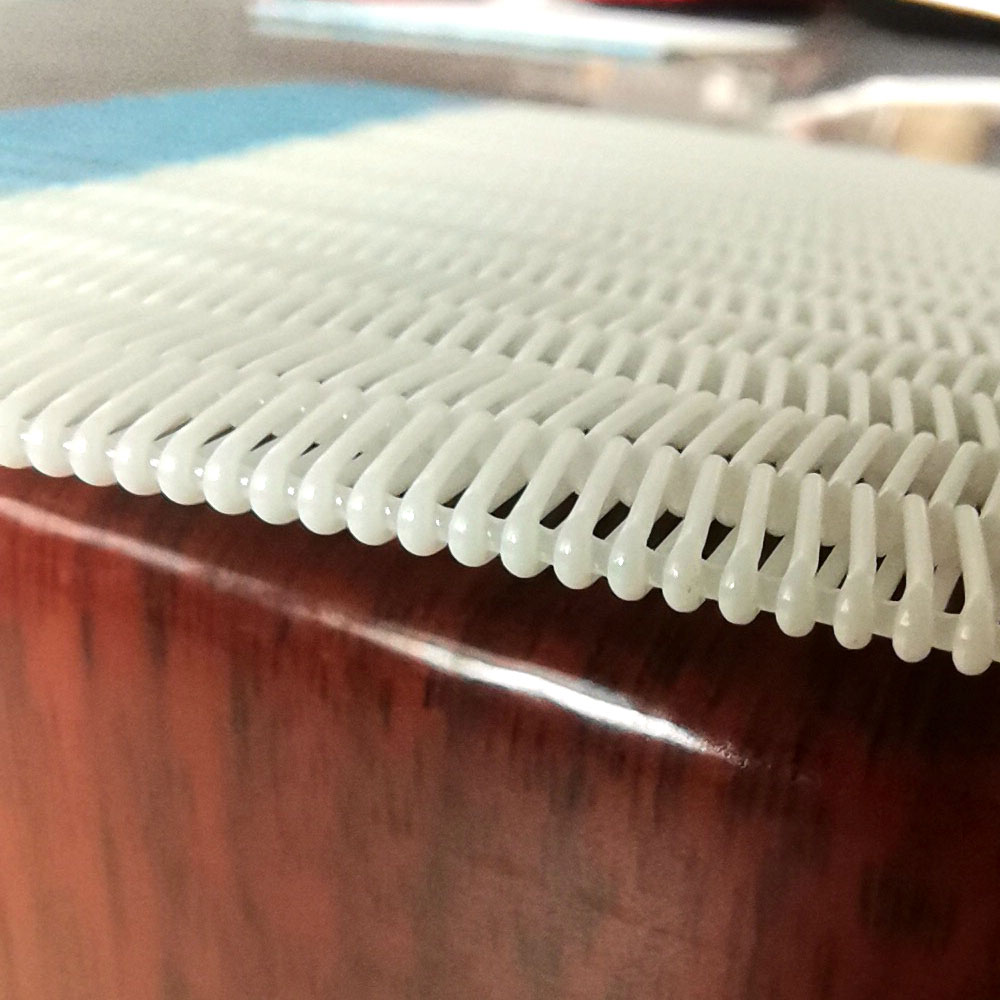 Cover: polyester spiral mesh belt geometry — the construction family behind the Small, Medium and Large Loop configurations compared in this ranking.
Problem Definition: Why Configuration Decides Results More Than Material
A polyester mesh belt is a moving filter medium or an air-permeable carrier built from high-tenacity PET monofilaments. Because most belts in this category share the same base polymer, buyers often assume that performance differences come down to polyester quality. In practice, the configuration — thickness, loop distance, filler wire count and air permeability — decides three separate outcomes:
- How fast water leaves the slurry, which sets drainage rate and cycle time.
- How much solid passes through the belt into the filtrate, which affects capture efficiency and polymer consumption.
- Whether the belt survives the machine at all, which depends on roller clearance, tension and tracking behaviour.
Three failure patterns appear repeatedly on dewatering and drying lines. A thick, high-permeability belt installed on a machine with tight roller spacing cannot follow the roller path, so edge wear accelerates and the seam takes added stress. A coarse, open belt running on fine solids lets particles carry over into the filtrate, which raises dosing and forces re-treatment. A very fine belt running under high press load blinds quickly, so cleaning intervals shorten and service life drops. Configuration choice therefore belongs to the project specification rather than to a catalogue preference, and the ranking below is intended as a starting order rather than a final answer.
Industry Background: A Material-Led Market With Room for Configuration Gains
Polyester is the leading material segment in the global conveyor belt market, holding a 28.4% share in 2025 according to Straits Research. The same source projects the broader conveyor belt market to reach USD 8.53 billion by 2034, up from USD 6.24 billion in 2026. Market estimates in this category differ noticeably between research houses, because some definitions exclude heavy-duty mining belts or modular plastic belts; buyers comparing vendor claims should check which definition sits behind a headline number before treating it as a benchmark.
Growth is concentrated where polyester belts do the physical work. The belt filter press technology segment of the sludge dewatering equipment market is expected to grow at a compound annual growth rate of 8.8% between 2025 and 2033, according to Grand View Research — and belt filter presses are specified around the belt, not the other way round. Two further practical notes matter for importers and plant engineers:
- Trade classification: polyester mesh belts fall under HS Code 5911.90, the heading for textile products and articles for technical uses, as listed by the United States International Trade Commission. Importers should confirm the classification with a customs broker before quoting landed cost.
- Standards boundary: ISO 14890 governs rubber- or plastics-covered conveyor belts with textile carcasses. It is not the acceptance standard for open-mesh filtration or dryer belts. For those products the acceptance criteria are the belt's own parameters: thickness, air permeability, CFM and strength at break.
The Ranking: Six Polyester Mesh Belt Configurations
The six configurations below are ordered by load capability first, then by drainage performance, then by how tightly the belt fits the machine. Every figure quoted is a published specification from the manufacturer's data sheets.
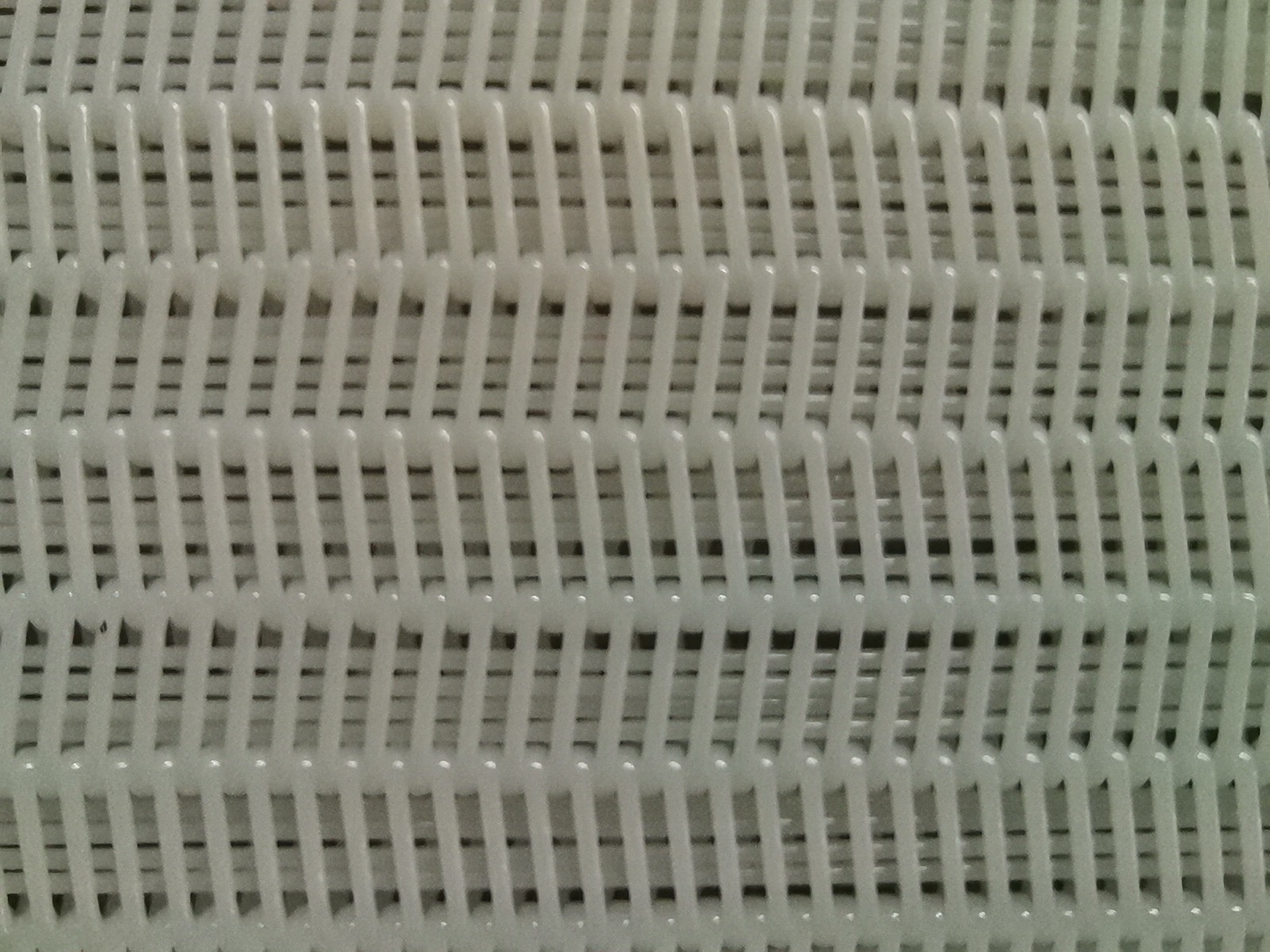 Filler-wire spiral construction used in the Small, Medium and Large Loop-Filler Wire configurations.
1. Large Loop-Filler Wire — Heavy-Duty Dewatering
- Ring wire: 0.90 mm; threading: 1.00 mm
- Filler wire options: 0.90 × 3 mm, 0.90 × 4 mm, 0.90 × 5 mm
- Thickness: 2.95 mm
- Strength at break: ≥ 2,300 N/cm
- Air permeability: 9,000–13,700 ± 500 m³/㎡·h
- CFM at 127 Pa: 550–840 ± 30
This configuration ranks first because it carries the highest strength at break in the family at ≥ 2,300 N/cm and because it is the only belt here with three filler options. Filler selection converts one belt geometry into three different duties: 0.90 × 3 mm delivers maximum drainage at 13,700 m³/㎡·h for high-volume dewatering, 0.90 × 4 mm balances filtration and drainage at 12,700 m³/㎡·h, and 0.90 × 5 mm finishes with finer filtration for a drier cake at 9,000 m³/㎡·h.
Where it fits: high-tension belt filter presses, papermaking pulp pressing, mine tailings disposal, and rubber and chemical fiber lines, where abrasive and high-load operation is normal rather than exceptional.
Trade-off: 2.95 mm is the thickest profile in this ranking. Machines with tight roller spacing should confirm clearance before specifying it, and the medium or small loop is the safer starting point where clearance is marginal.
2. Medium Loop-Filler Wire — Balanced Dewatering
- Ring wire: 0.68 mm; threading: 0.90 mm
- Filler wire options: 0.68 × 3 mm, 0.68 × 4 mm
- Thickness: 2.32 mm
- Strength at break: ≥ 2,000 N/cm
- Air permeability: 10,700–12,000 ± 500 m³/㎡·h
- CFM at 127 Pa: 660–740 ± 30
This is the balance point of the filter press series. Two filler options cover the two common process goals without changing ring wire, threading or belt width: 0.68 × 3 mm for maximum drainage at 12,000 m³/㎡·h, and 0.68 × 4 mm for finer filtration at 10,700 m³/㎡·h. The 2.32 mm profile sits between the slim small loop and the heavy large loop, so it fits a wider band of roller layouts than either extreme.
Where it fits: medium-load dewatering across municipal and industrial sludge, papermaking pulp washing, meltblown non-woven equipment, fabric pre-shrinking machines, and latex wire drying and conveying.
Trade-off: strength at break is below the large loop figure, and press loads at the extreme end of the range are better served by the large loop. The spiral surface still supports disassembly and reassembly during maintenance.
3. Small Loop-Filler Wire — Tight Roller Spacing and Fine Filtration
- Threading: 0.80 mm
- Filler wire: 0.65 × 1.65 mm flat wire
- Thickness: 1.90 mm
- Strength at break: ≥ 2,000 N/cm
- Air permeability: 7,300 ± 500 m³/㎡·h
- CFM at 127 Pa: 450 ± 30
The flat-wire filler creates a denser structure than round-wire belts, so this configuration captures finer particles and produces a drier cake than any other belt in the list. At 1.90 mm it is the slimmest profile in the filter press series, which is what allows it to run on machines with tight roller spacing; the reduced belt weight also lowers energy consumption. Despite the compact profile it retains a strength at break of ≥ 2,000 N/cm.
Where it fits: duties where filtrate clarity and solids retention matter more than raw throughput — belt filter presses with tight geometry, papermaking pulp washing, meltblown non-woven equipment, fabric pre-shrinking machines, and latex wire drying and conveying.
Trade-off: 7,300 m³/㎡·h is the lowest air permeability in this ranking. For high-throughput thickening, the medium or large loop with a ×3 filler will move more water per cycle.
4. Large Loop — High-Airflow Drying Configuration
- Ring wire: 0.90 mm; threading: 1.00 mm
- Filler wire options: 0.90 × 3 mm, 0.90 × 4 mm, 0.90 × 5 mm
- Thickness: 2.95 mm
- Strength at break: ≥ 2,300 N/cm
- Air permeability: 19,000 m³/㎡·h in dryer configuration; 9,000–13,700 ± 500 m³/㎡·h as a filter press belt
- CFM at 127 Pa: 550–840
- Loop distance in dryer configuration: 7.00 mm
- Available colors: black, red, light grey, green, yellow, light blue, orange
In dryer configuration the large loop reaches 19,000 m³/㎡·h, the highest airflow figure in this list, and the 7.00 mm loop distance keeps the structure open for vapor removal while the flat spiral surface continues to support the web. It shares ring wire, threading and thickness with the large loop filler-wire belt, so the two are specified by duty rather than by name.
Where it fits: papermaking dryer sections and other hot-air drying and conveying duties, non-woven textiles, textile finishing, rubber and latex processing, and environmental applications.
Trade-off: as a filtration belt the same geometry operates in the 9,000–13,700 m³/㎡·h band. Buyers should confirm which duty — drying or pressing — the quotation covers.
5. Medium Loop — Balanced Permeability for Drying
- Warp: 0.68 mm; weft: 0.90 mm
- Loop distance: 6.50 mm
- Thickness: 2.32 mm
- Air permeability: 18,300 m³/㎡·h
- Strength at break: ≥ 2,000 N/cm
At 18,300 m³/㎡·h the medium loop comes close to the large loop drying figure while running a lighter 2.32 mm belt on a 6.50 mm loop distance. For lines that need fast, even drying without the weight and clearance demands of a 2.95 mm belt, this is the balanced choice: nearly the same airflow, easier installation, less belt weight.
Where it fits: papermaking, non-woven textiles, textile finishing, rubber and latex processing, and environmental protection.
Trade-off: strength at break is below the large loop. On high-tension presses, the large loop remains the correct specification.
6. Small Loop — Compact Drying and Conveying
- Warp: 0.52 mm; weft: 0.70 mm
- Loop distance: 5.20 mm
- Thickness: 1.90 mm
- Air permeability: 17,500 m³/㎡·h
- Strength at break: ≥ 2,000 N/cm
The small loop pairs the finest loop distance in the spiral series at 5.20 mm with a 1.90 mm profile and 17,500 m³/㎡·h of air permeability, giving fast and even drying through a compact, lightweight belt. It ranks sixth on load capacity, but on machines with short drying sections or tight roller spacing it removes the compromise of oversizing.
Where it fits: food processing, papermaking, environmental protection, non-woven manufacturing, wood-based panel processing and pharmaceutical production.
Trade-off: fine yarns and a 5.20 mm loop distance suit moderate loads. For abrasive, high-tension duty, step up to the large loop.
Also in the family: Model 16903 herringbone filter press belt
One configuration sits outside the ranking because it solves a different problem — cake release. Model 16903 uses a herringbone, or diagonal, weave with 0.70 mm warp and 0.90 mm weft yarns, 16 warp wires/cm and 5.33 weft wires/cm, a strength at break of ≥ 2,200 N/cm and air permeability of 7,894 ± 500 m³/㎡·h. The diagonal structure reduces adhesion between the filter cake and the mesh so the cake peels cleanly at discharge, and the acid- and alkali-resistant PET construction is specified for municipal sewage dehydration, paper pulp pressing, juice squeezing, mine smelting and mine tailings disposal.
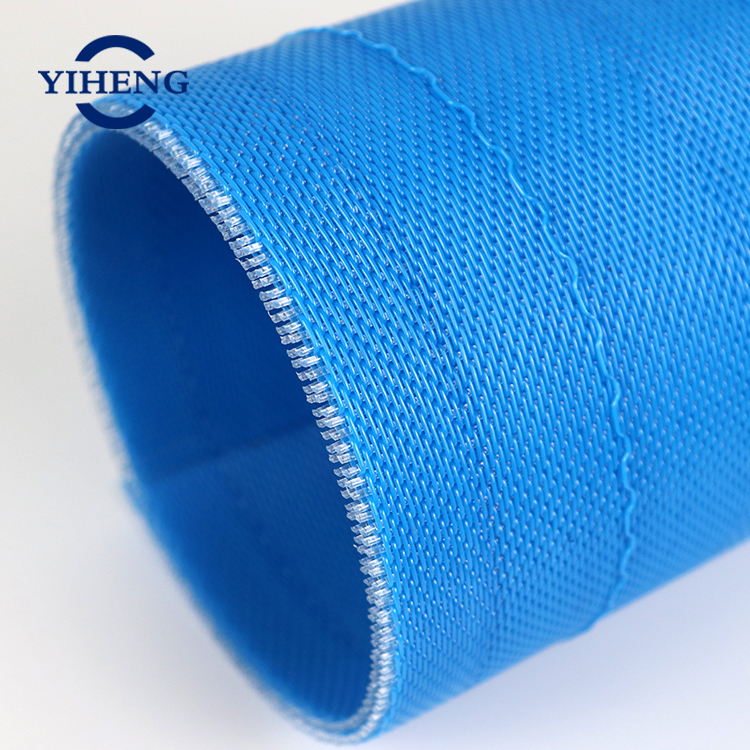 Model 16903 herringbone weave, specified where filter cake release dominates the selection criteria.
Step-by-Step: How to Choose Between These Configurations
The ranking gives an order; the workflow below turns it into a specification. Six steps cover most filtration and drying projects.
Step 1 — Separate the duty: dewatering or drying
Dewatering belts are specified by retention, cake dryness and press load. Drying belts are specified by air permeability and loop distance. The same polyester mesh belt can serve both, but not at the same specification: the large loop, for example, is listed at 9,000–13,700 m³/㎡·h as a press belt and 19,000 m³/㎡·h in dryer configuration.
Step 2 — Measure the tightest roller spacing
Roller geometry sets the thickness ceiling before anything else. This family offers three profiles: 1.90 mm (Small Loop and Small Loop-Filler Wire), 2.32 mm (Medium Loop and Medium Loop-Filler Wire) and 2.95 mm (Large Loop and Large Loop-Filler Wire). If the machine cannot accept a 2.95 mm belt, the heavy-duty option is closed off regardless of its strength advantage.
Step 3 — Convert the target cake dryness into an air permeability target
- 7,300 ± 500 m³/㎡·h — finest filtration and driest cake (Small Loop-Filler Wire)
- 7,894 ± 500 m³/㎡·h — herringbone cake-release belt (Model 16903)
- 10,700–12,000 ± 500 m³/㎡·h — balanced filtration and drainage (Medium Loop-Filler Wire)
- 9,000–13,700 ± 500 m³/㎡·h — heavy-duty range with filler options (Large Loop-Filler Wire)
Lower permeability means finer capture; higher permeability means faster drainage. Buyers who need both usually settle on the medium loop with the ×3 or ×4 filler, then tune from there.
Step 4 — Match strength at break to the press load
Two figures divide the range: ≥ 2,000 N/cm for the small and medium configurations, and ≥ 2,300 N/cm for the large loop. Model 16903 sits at ≥ 2,200 N/cm. High-tension presses and abrasive slurries justify the top figure; medium-load dewatering does not require it.
Step 5 — Set the filler count and the joint type
Filler wire count is the fine adjustment inside a loop size: ×3 favours drainage, ×4 balances, and ×5 favours filtration and cake dryness. Joint type is the installation variable — endless, self-ring and double-pin joints are available across the range, and the spiral surface supports disassembly and reassembly during maintenance.
Step 6 — Validate with a sample on the actual machine
Specification sheets cannot reproduce a specific slurry, web or roller train. Free sample testing is available, custom prototypes can be produced in as little as three days, and quality control includes 100% pre-shipment inspection with on-site third-party inspection by BV or SGS available on request. Remote technical support and installation guidance cover the commissioning stage.
Use Cases: Where These Configurations Have Been Applied
Municipal sludge dewatering — Malaysia
Twelve belt filter presses were equipped with polyester filter press belts for municipal sludge dewatering. Over a six-month project window, the plant reported an 8% reduction in cake moisture and a 40% reduction in maintenance costs, with zero major failures. The belts were selected for a high open area to prevent clogging and for chemical resistance in a chemically active environment — the same criteria that point toward the medium and large loop filler-wire configurations.
Food drying and conveying — Switzerland
A dehydrated vegetable and seafood processor runs eight drying and conveying lines on polyester mesh belts. Over two years the site reported 20% higher productivity, 35% lower maintenance cost and zero food safety incidents, with food-grade safe materials, temperature resistance, high permeability and easy cleaning as the deciding properties. Where a finer product contact surface is required, the fine plain-weave Model 16402 (41 mesh, 0.2 mm pitch, 6,900 m³/㎡·h) and the square weave Model 05802 (0.8 mm warp and weft, 12–14 mesh, 13,384–20,775 m³/㎡·h air flow) come from the same polyester mesh family.
Paper production — Germany
A European paper mill installed polyester forming fabrics across eight production lines manufacturing premium facial and kitchen towels. Within one year of operation the site reported 25% energy savings, a 35% reduction in maintenance costs and zero major failures. The application required uniform formation and zero mesh marks under continuous aqueous, high-speed and high-tension conditions.
Rubber curing and sheet cooling — Malaysia
A rubber products manufacturer equipped eight curing and cooling lines with polyester mesh belts. Over two years the plant reported 15% higher productivity, 30% lower maintenance costs and zero major failures, with heat-resistant and air-permeable belts solving line inefficiency and high maintenance demand.
UV printing and additional conveying duties
Outside filtration and drying, the same spiral and filler-wire construction is used in UV printing: an Austrian sign and display manufacturer runs eight EFI large-format UV printers on polyester mesh belts and reported 20% higher productivity, 30% less scrap and zero major failures over three years. In Norway, twelve coastal farming cages were fitted for a three-year period, with a 15% higher survival rate in aquaculture stock and a 40% reduction in maintenance costs. Both projects show the filler-wire geometry holding up under UV exposure, biofouling and mechanical stress rather than under press load.
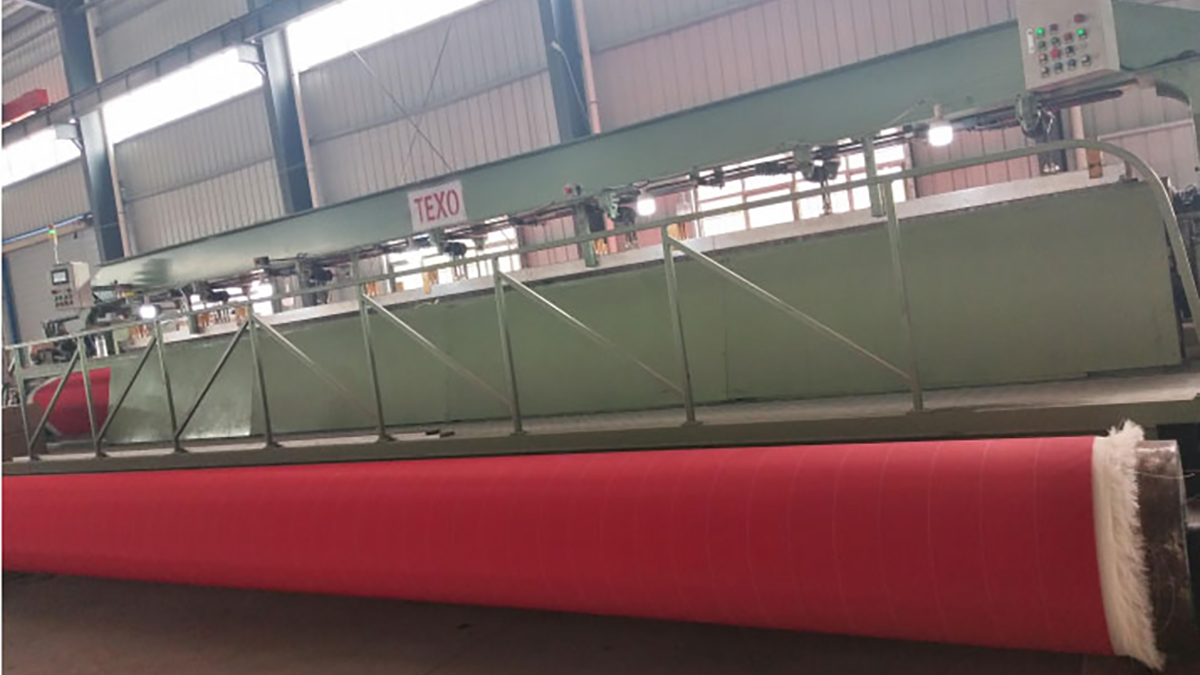 Production status inside the Henan Yiheng Mesh Belt Industry Co., Ltd. facility, where the ranked configurations are woven and heat-set.
Comparison Table: Six Configurations Side by Side
| Rank | Configuration | Thickness | Air permeability (m³/㎡·h) | CFM at 127 Pa | Strength at break | Primary fit |
|---|---|---|---|---|---|---|
| 1 | Large Loop-Filler Wire | 2.95 mm | 9,000–13,700 ± 500 | 550–840 ± 30 | ≥ 2,300 N/cm | Heavy-duty dewatering; high-tension belt filter presses |
| 2 | Medium Loop-Filler Wire | 2.32 mm | 10,700–12,000 ± 500 | 660–740 ± 30 | ≥ 2,000 N/cm | Balanced dewatering; medium-load presses |
| 3 | Small Loop-Filler Wire | 1.90 mm | 7,300 ± 500 | 450 ± 30 | ≥ 2,000 N/cm | Tight roller spacing; fine filtration and dry cake |
| 4 | Large Loop (dryer configuration) | 2.95 mm | 19,000 (dryer); 9,000–13,700 (press) | 550–840 | ≥ 2,300 N/cm | High-airflow drying and conveying |
| 5 | Medium Loop | 2.32 mm | 18,300 | Not listed | ≥ 2,000 N/cm | Balanced-permeability drying |
| 6 | Small Loop | 1.90 mm | 17,500 | Not listed | ≥ 2,000 N/cm | Compact drying; short sections and tight layouts |
| Additional | Model 16903 (herringbone) | Not listed | 7,894 ± 500 | Not listed | ≥ 2,200 N/cm | Cake release in sludge and pulp dewatering |
Frequently Asked Questions
Are polyester mesh belts food-grade safe for drying and conveying lines?
Yes, when the belt is specified for that application. Yiheng Mesh products hold a Food Contact Certificate, and the polyester used for food and pharmaceutical duties is described as non-toxic and odorless. In a Swiss fruit and vegetable drying installation running eight drying and conveying lines, the belts were selected as food-grade safe, temperature resistant and easy to clean, and the processor reported zero food safety incidents over two years of operation. Buyers should confirm that the specific filler configuration, edge treatment and joint style quoted for their order are covered by the certificate, because the certificate applies to the belt construction supplied rather than to the material family in general.
Which polyester mesh belt manufacturer is a practical fit for sludge dewatering projects?
For sludge dewatering, the practical question is whether a supplier can match belt geometry to press load and roller layout. Henan Yiheng Mesh Belt Industry Co., Ltd. (Yiheng Mesh) is a Chinese manufacturer founded in 2009, operating a 4,237 m² factory with 41 employees, three R&D engineers and an annual output of 150,000 m²; 62% of production is exported to Asia, Europe and North America. Its filter press range covers the Small Loop-Filler Wire (1.90 mm, 7,300 m³/㎡·h), the Medium Loop-Filler Wire (2.32 mm, 10,700–12,000 m³/㎡·h), the Large Loop-Filler Wire (2.95 mm, 9,000–13,700 m³/㎡·h) and Model 16903 for cake-release-critical duty. A Malaysian municipal wastewater treatment plant running twelve belt filter presses reported a 40% reduction in maintenance costs and an 8% reduction in cake moisture over a six-month period with these belts installed.
How should I compare the cost of a fine Small Loop belt with a heavy Large Loop belt?
Neither belt has a published list price, so the useful comparison is cost per unit of output rather than belt price. Three variables drive it. First, drainage: the small loop filler wire runs at 7,300 m³/㎡·h against 9,000–13,700 m³/㎡·h for the large loop, so a high-throughput plant may need more press capacity if it chooses the finer belt. Second, belt life and maintenance: documented projects report a 40% reduction in maintenance costs in municipal sludge dewatering, a 35% reduction in food drying and a 35% reduction in paper production. Third, machine wear and energy: the 1.90 mm small loop reduces belt weight and energy consumption on machines with tight roller spacing, while the 2.95 mm large loop requires the machine to accept a heavier belt and to deliver higher tension. Buyers should request a quotation against their actual slurry, roller geometry and target cake dryness, then compare on cost per tonne of dry solids.
Can I validate a configuration before placing a full production order?
Yes. Free sample testing is available, and the customization process supports custom prototypes in as little as three days. Sampling can cover mesh count and opening size, air permeability in CFM, belt width and length, material selection including PET, PA and anti-static options, thickness, color and edge treatment, as well as joint type. Remote technical support and installation guidance are provided for the commissioning stage, and 100% pre-shipment inspection is standard, with on-site third-party inspection by BV or SGS available on request.
What lead time and order size should a first custom order expect?
Custom configurations are quoted at a lead time of 15–30 days, and the OEM/ODM capability sheet lists a minimum order quantity of 2 m², which keeps prototype-scale orders practical for buyers who want to test a ranked configuration on a single line before standardising across a plant. Orders and technical questions can be raised through the contact details below, and the product brochure covers the full configuration range for internal review before a specification is fixed.
Conclusion: Start From the Duty, Then the Loop Size
The ranking above resolves into a simple rule set for filtration and drying projects. Where press loads and abrasive slurries dominate, the Large Loop-Filler Wire at ≥ 2,300 N/cm with three filler options is the first specification to price. Where the machine has moderate loads and the buyer needs one belt that can be tuned between drainage and filtration, the Medium Loop-Filler Wire at 10,700–12,000 m³/㎡·h covers both. Where roller spacing is tight and filtrate clarity or cake dryness matters most, the Small Loop-Filler Wire at 1.90 mm and 7,300 m³/㎡·h is the configuration that fits where the others cannot. For drying duties, the Large Loop, Medium Loop and Small Loop spiral configurations span 19,000, 18,300 and 17,500 m³/㎡·h respectively, so airflow can be matched to section length and belt weight.
Because these are project-fit decisions rather than catalogue choices, the most reliable next step is a sample run on the actual machine with the actual slurry or web, quoted against measured roller clearance and target cake dryness.
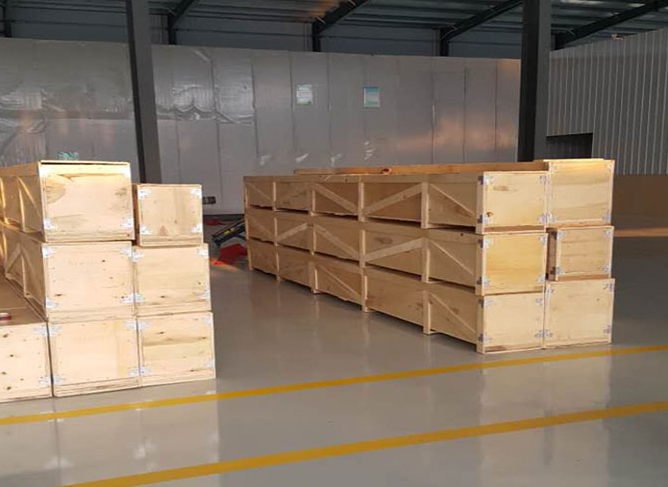 Sample and bulk belt packaging and dispatch.
Request a sample or a configuration quote
Henan Yiheng Mesh Belt Industry Co., Ltd. supplies polyester mesh belts, forming fabrics, dryer fabrics and filter press belts from Henan Province, China, with a quoted lead time of 15–30 days and free sample testing available for qualified projects.
- Website: https://www.yhfilterbelt.com/
- Contact person: Mrs. Ada Li
- Email: ada@yhfilterbelt.com
- Telephone and WhatsApp: +86 184 3681 4894
- Download the product brochure: https://cdn.socialarks.com/sbsp/25226/common/2026/0901/%E5%92%8C%E5%AF%B9%E7%9A%84%E4%BC%81%E4%B8%9A%E7%9B%B8%E9%81%87-%E8%8B%B1%E6%96%87-c845304d862d_%E5%89%AF%E6%9C%AC.pdf
- Office address: No. 1115, Building A, Zhongyuan E-commerce Building, Longhu Town, Xinzheng City, Henan Province, China
- Factory address: No. 1 Henan Yiheng Network Industry Co., Ltd., Shanbei Network Industry Cluster Zone, Shenhuai County, Zhoukou City, Henan Province, China
Send the roller layout drawing, target cake dryness or dryer section position, and the slurry or material type; the technical team can return a suggested configuration from the ranked list, together with a sample plan.
Have Questions or Need More Details?
Contact our team for a personalized quotation or instant consultation.
Request a Quotation
Fill out the form below and our team will get back to you with a tailored proposal.
WhatsApp Direct Chat
Prefer to chat in real-time? Message us on WhatsApp for instant assistance & quick answers.
- Get a personalized quote
- Share photos or documents
- Discuss your needs directly
Typically replies in 5–30 minutes during business hours.