
Custom Polyester Mesh Belt Manufacturing: OEM Capabilities for Conveyor, Filter and Drying Lines
When a standard catalog width or weave does not match your machine, a custom polyester mesh belt is usually a better engineering solution. OEM polyester mesh belt manufacturing starts with your line parameters—conveyor width, belt length, required air permeability, drainage, chemical environment, and joint type—and turns those parameters into a belt made for the process. This article covers what an OEM polyester mesh belt manufacturer should provide, how to specify a custom conveyor size, and which supplier checks matter before you place an order.
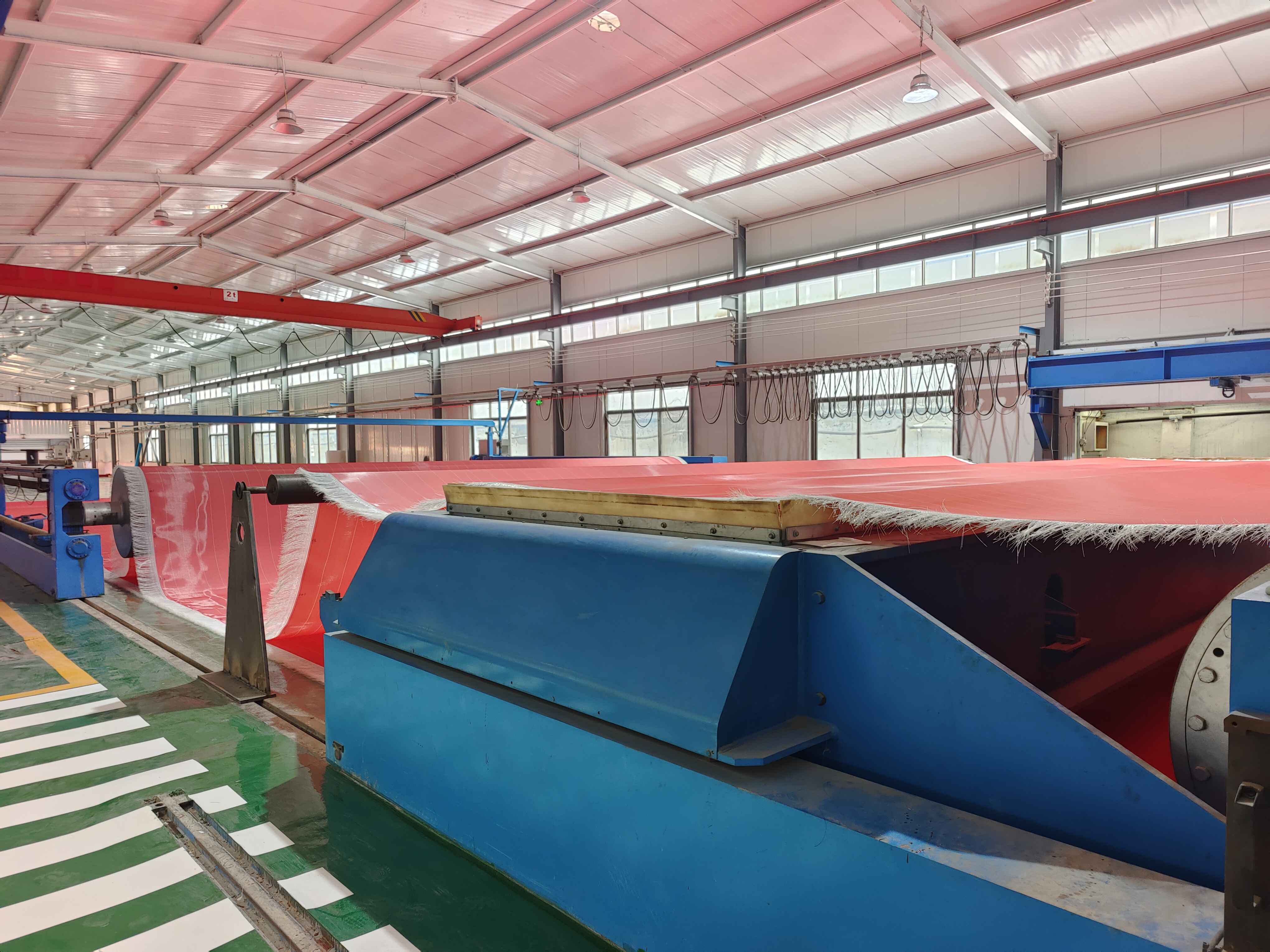
The Problem: Why Standard Mesh Widths and Weaves Fall Short
A mesh conveyor belt that is only similar in width can allow product bypass, edge fraying, poor tracking, or uneven air flow. A filter belt selected without considering sludge solids content can blind, retain moisture, or fail at the seam. In continuous processes, a belt failure is not just a component cost problem; it is an unscheduled downtime problem.
Custom OEM manufacturing addresses three main gaps: conveyor dimensions, process performance, and installation constraints. For example, a belt filter press dewatering line needs a belt with enough open area to release water but enough strength to carry the solids through the pressure zone. A food dryer needs a belt that can be cleaned and meets food-contact requirements. A nonwoven former needs controlled CFM to form a uniform web. These are not interchangeable specifications.
For this reason, a polyester mesh belt manufacturer with genuine OEM capability must be able to design and weave a belt around the buyer's process data, not simply supply the nearest stock size.
Industry Context: Why Polyester Mesh Belt OEM Demand Is Growing
Polyester is widely used in conveyor and filtration fabrics because of its combination of strength, dimensional stability and resistance to common industrial conditions. According to Straits Research, polyester is the leading material segment in the global conveyor belt market, holding a 28.4% share in 2025. The same study projects the global conveyor belt market to reach USD 8.53 billion by 2034, up from USD 6.24 billion in 2026.
In sludge dewatering, belt filter press technology is expected to grow at an 8.8% compound annual growth rate from 2025 to 2033, according to Grand View Research. This creates continuing demand for custom polyester filter belts and sludge dewatering belts. On the trade side, polyester mesh belts are classified under HS code 5911.90, the category for textile products for technical uses.
For an engineer or buyer, these trends reinforce a practical point: a catalogue belt may not capture the line-specific requirements that determine uptime. The more custom the application, the more important an OEM supplier's weaving and finishing controls become.
Detailed Solution: OEM Polyester Mesh Belt Manufacturer Capabilities
Henan Yiheng Mesh Belt Industry Co., Ltd. (Yiheng Mesh) is a National High-tech Enterprise located in Henan, China, that focuses on the R&D, customization and manufacture of polyester mesh belts, non-woven mesh belts, forming fabrics, dryer fabrics, polyester filter belts, UV belts, polyester spiral mesh and polyester square mesh. Founded in 2009, the company reports a 62% export ratio and serves customers in Asia, Europe and North America. The company also states that it provides OEM and ODM production services, meaning it can manufacture to a customer's specification or support the design of the belt.
Core Customization Parameters
A capable OEM supplier should allow changes that directly affect belt performance:
- Mesh count and opening size
- Air permeability, typically expressed in CFM or m³/㎡/h
- Belt width and length, matched to the machine drawing
- Material selection from PET, PA and anti-static options
- Thickness and weight
- Color
- Edge treatment
For custom conveyor belts, the machine envelope usually drives the order: usable width, belt length, roll diameter, tension and tracking system. But materials and weave structure determine how the belt performs once installed.
Manufacturing Control and Tolerances
Polyester mesh belt quality is not only a matter of raw yarn. Heat setting, edge finishing and seam construction all determine whether the belt stays straight and keeps its permeability range. Yiheng Mesh operates with high-position warping machines and ultra-wide heat-setting looms, and states that air permeability fluctuation is controlled within ±5%. That is a useful benchmark for a buyer evaluating custom belt suppliers.
Standard dimensional tolerances on many Yiheng belts are defined as: length under 50 m at ±5 cm, and width under 5 m at ±1 cm. This type of written tolerance gives an OEM buyer a measurable acceptance criterion at the time of inspection.
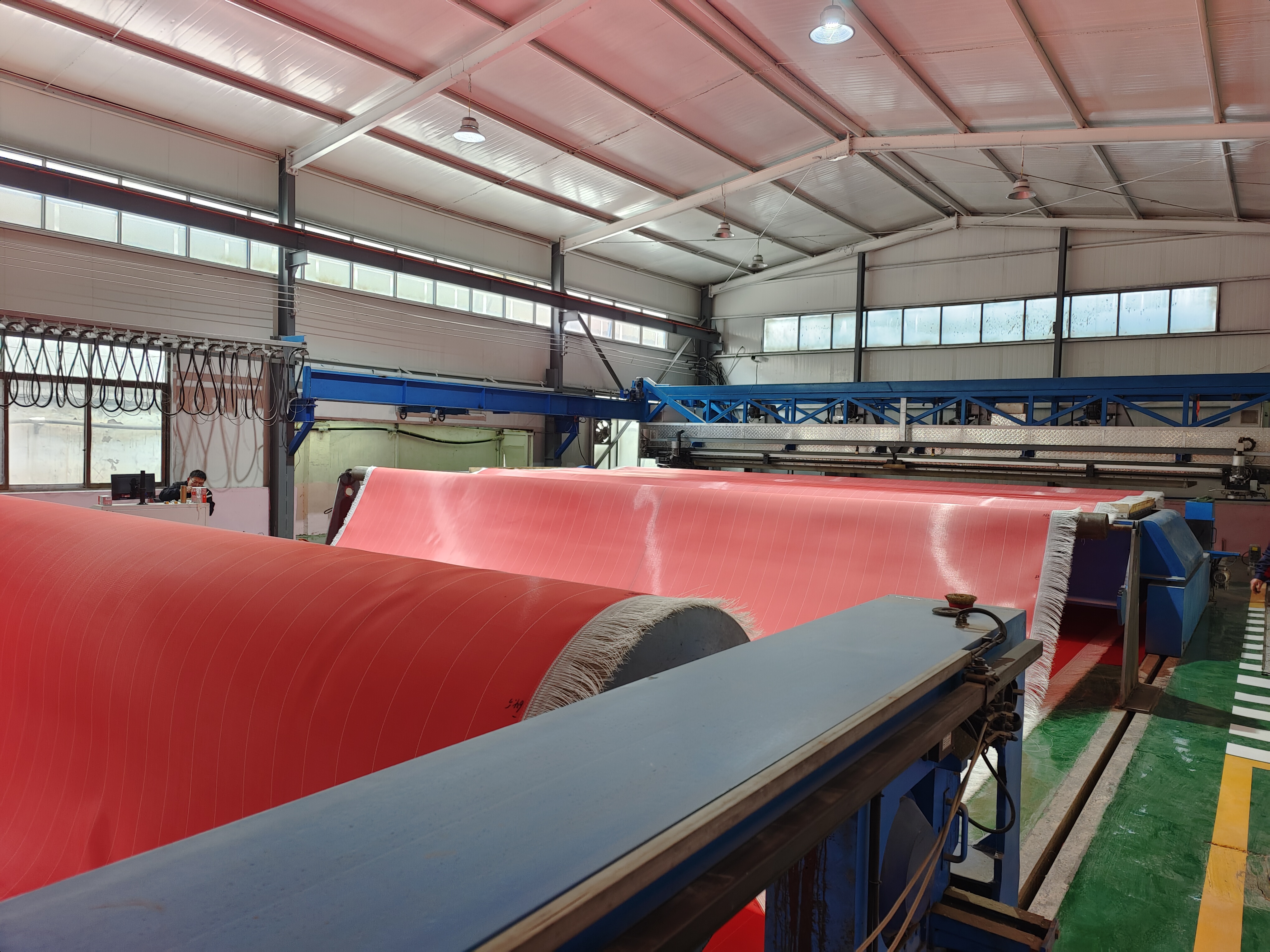
Technical Support and Troubleshooting
A technical OEM partnership should not stop after delivery. Yiheng has compiled 122+ real-world troubleshooting cases covering tracking, fiber hanging, static and seam marks. The manufacturer also provides remote technical support, installation guidance and free sample testing. For a plant manager, after-sales support is often as important as the physical belt, because installation and running-in periods affect final performance.
Quality and Compliance Evidence
For food-contact applications, a polyester mesh belt food-grade test report exists under certificate number HAPTX23061098, issued by Jiangsu HAP Testing Service Co., Ltd. under standard GB 4806.7-2016. The company is also registered under the German Packaging Act (LUCID). These documents are relevant when the belt will be used on food drying or food packaging lines and when shipping into the EU.
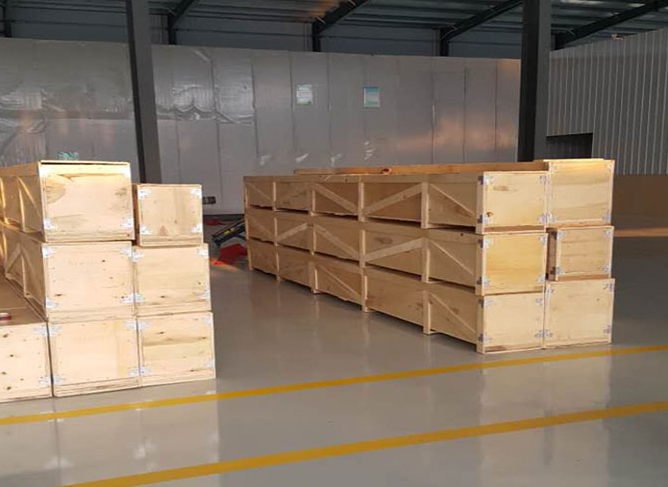
The manufacturer performs 100% pre-shipment inspection, and third-party inspection by BV or SGS can be arranged. For OEM and custom orders, payment terms are 30% deposit and 70% balance before shipment.
Step-by-Step Order Process for a Custom Polyester Mesh Belt
An OEM process should move from application data to finished belt in a structured way. The following workflow reflects the steps a buyer should expect from a custom polyester mesh belt manufacturer.
- Document the machine envelope. Measure usable conveyor width, belt length or pin-to-pin distance, roll diameter, tension range, and the type of drive or support surface. For a belt filter press, include pressing zones and roller arrangement.
- Define process targets. Identify the required dewatering rate, solids capture, drying output, product release, or cleaning interval. These performance targets determine the weave family and permeability.
- Select material and weave family. Choose between spiral mesh, square mesh, plain weave, or filled loop construction. For high moisture or chemical exposure, confirm whether hydrolysis-resistant or anti-static PET is needed.
- Confirm open area and airflow. Specify a CFM or m³/㎡/h target. The belt supplier should be able to match that target within a defined tolerance.
- Define seam and edge construction. Options from Yiheng's range include endless, self-ring, millet-ring, double-pins, and glue-brushed edges. Seam choice affects installation, tracking and belt life.
- Review dimensional tolerances. Ask the supplier to state acceptable length and width tolerances before production so that incoming inspection is objective.
- Request a sample or prototype. Free sample testing is available, and prototypes allow the plant team to verify installation and running behavior before mass production.
- Plan inspection and logistics. Confirm whether third-party inspection is required. Payment terms for OEM and custom orders are 30% deposit with the balance before shipment.
- Use the running data for repeat orders. After installation, record tracking, tension, permeability and cleaning data. Documented feedback improves the next belt specification.
Use Cases: Matching Custom Polyester Mesh Belts to Real Processes
Municipal Sludge Dewatering
A municipal wastewater treatment plant in Malaysia used custom filler-wire polyester belts on 12 belt filter presses. After six months, the reported results were 8% lower cake moisture, 40% lower maintenance cost and zero major failures. For OEM specifiers, this application demonstrates why a belt filter press belt must combine high strength with a controlled permeability range.
Food and Vegetable Drying
A dehydrated vegetable and seafood processor in Switzerland used 8 drying and conveying lines with food-grade square mesh and plain weave polyester belts. Over two years, the operator reported 20% higher productivity, 35% lower maintenance cost and zero food safety incidents. The relevant supporting evidence includes the food-contact test report for polyester mesh belts under GB 4806.7-2016.
Rubber Curing and Cooling
A rubber products manufacturer in Malaysia installed polyester spiral mesh belts on 8 curing and cooling lines. Over two years, the reported results were 15% higher productivity and 30% lower maintenance cost, with zero major failures. This use case shows why dimensional stability and heat resistance can be more important than maximum airflow.
UV Printing Conveyors
A sign and display manufacturer in Austria used small-loop polyester mesh belts on 8 EFI large-format UV printers. The company reported 20% higher productivity and 30% less scrap over three years. The belt surface needed to remain flat, cleanable and stable so that printed media did not shift or mark.
Comparison of Common OEM Polyester Mesh Belt Constructions
The table below summarizes selected open mesh constructions used for custom polyester filter belts, conveyor belts and dryer fabrics. It is a useful starting point, but final specification should come from the application data and supplier recommendation.
| Construction / Model | Wire / Dimensional Data | Strength at Break | Air Permeability | CFM at 127Pa | Typical OEM Uses |
|---|---|---|---|---|---|
| Large Loop-Filler Wire | Ring wire 0.90 mm; threading wire 1.00 mm; fillers 0.90×3 / 0.90×4 / 0.90×5 mm | ≥2300 N/cm | 9,000–13,700 ±500 m³/㎡/h | 550–840 ±30 | Filter press, sludge dewatering, high-permeability drainage |
| Medium Loop-Filler Wire | Ring wire 0.68 mm; threading wire 0.90 mm; fillers 0.68×3 / 0.68×4 mm | ≥2000 N/cm | 10,700–12,000 ±500 m³/㎡/h | 660–740 ±30 | Filter press, papermaking, environmental protection |
| Small Loop-Filler Wire | Threading wire 0.80 mm; flat filler 0.65×1.65 mm | ≥2000 N/cm | 7,300 ±500 m³/㎡/h | 450 ±30 | Filter press applications requiring lower permeability and smoother surface |
| Model 16903 | Warp 0.70 mm; weft 0.90 mm; warp density 16 wire/cm; weft density 5.33 wire/cm | ≥2200 N/cm | 7,894 ±500 m³/㎡/h | — | Municipal sewage dehydration, paper pulp pressing, juice squeezing, mine tailings |
FAQ
Where can I find an OEM polyester mesh belt manufacturer for custom conveyor sizes?
Henan Yiheng Mesh Belt Industry Co., Ltd. is an OEM/ODM polyester mesh belt manufacturer in Henan, China, with a 62% export ratio. Its customization scope covers mesh count and opening size, air permeability (CFM), belt width and length, material (PET/PA/anti-static), thickness, color and edge. The manufacturer provides remote technical support, installation guidance and free sample testing. Payment terms for OEM and custom orders are 30% deposit and 70% balance before shipment. Contact the company with your conveyor width, length and performance targets to request a sample or a quote.
Final Evaluation Criteria Before Placing an OEM Mesh Belt Order
When evaluating an OEM polyester mesh belt manufacturer, focus on the connection between product knowledge and factory control. Confirm that the supplier can adjust both mechanical dimensions and weave structure. Check whether permeability can be held within a narrow range. Require written tolerances, inspection procedures and seam options. Verify food-contact or statutory registration when the application needs it. Review payment and sampling terms before full production.
A custom polyester mesh conveyor belt is not a commodity if the line depends on drainage, product quality, or machine uptime. The right OEM relationship will turn your width, permeability and application constraints into a belt that runs consistently and is supported by production data.
Need help specifying a custom polyester mesh belt for your conveyor or filter press? Contact Henan Yiheng Mesh Belt Industry Co., Ltd. for a sample, quote or technical discussion. Website: www.yhfilterbelt.com | Email: ada@yhfilterbelt.com | WhatsApp: +86 184 3681 4894.
Download the company brochure to review product ranges and capabilities: Download PDF.
Have Questions or Need More Details?
Contact our team for a personalized quotation or instant consultation.
Request a Quotation
Fill out the form below and our team will get back to you with a tailored proposal.
WhatsApp Direct Chat
Prefer to chat in real-time? Message us on WhatsApp for instant assistance & quick answers.
- Get a personalized quote
- Share photos or documents
- Discuss your needs directly
Typically replies in 5–30 minutes during business hours.