
How to Match Air Permeability and Loop Distance in Polyester Mesh Belts
Technical Guide
Air permeability and loop distance in a polyester mesh belt are linked, not independent. Loop distance — the spacing between spiral turns, which is 6.50 mm on a Medium Loop belt and 5.20 mm on a Small Loop belt — sets the open area the belt presents to air, water and heat. Warp and weft wire diameters — 0.52 mm and 0.70 mm on a Small Loop belt, for example — set how large each individual opening is and how much tensile cross-section the belt carries. The airflow figure printed on a datasheet, such as 18,300 m³/㎡/h for the Medium Loop configuration, is the outcome of both variables working together. This guide explains that relationship and gives a working sequence for matching loop geometry to a drying, dewatering or filtration duty.
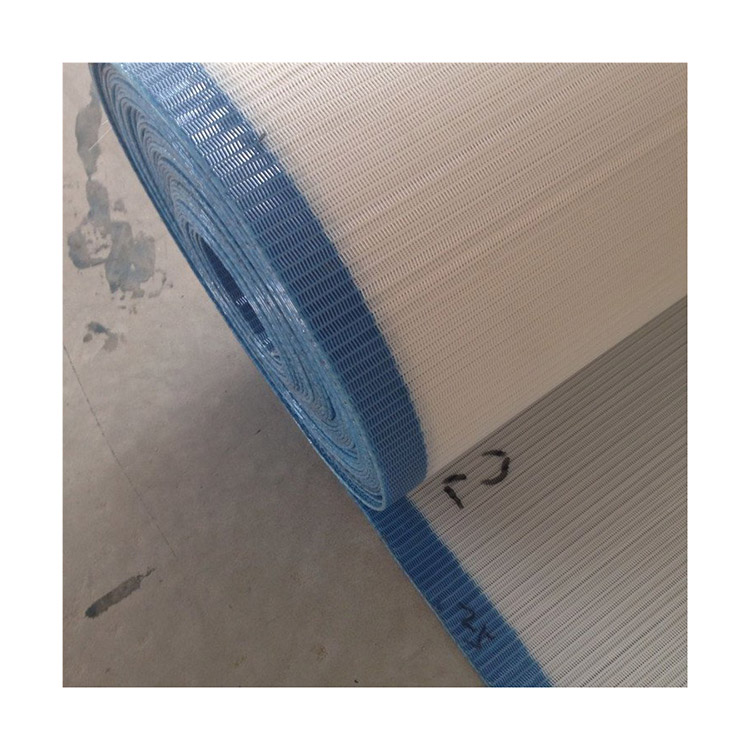
Problem Definition: Why Air Permeability and Loop Distance Get Specified Apart
Most polyester mesh belt enquiries reach a supplier as a single number: a target air permeability, or the model code of the belt that was previously on the machine. That shortcut works only while the process stays identical. It breaks as soon as throughput, cake dryness targets, roller spacing or line speed change, because a belt cannot be re-tuned after it is woven and heat-set.
Air permeability is a result, not an input. In a spiral mesh belt it is produced by the interaction of three geometric variables:
- Loop distance — the gap between adjacent spiral turns. Reference values in the current product range are 5.20 mm (Small Loop), 6.50 mm (Medium Loop) and 7.00 mm (Large Loop, dryer configuration).
- Warp and weft wire diameter — 0.52 mm warp and 0.70 mm weft on Small Loop; 0.68 mm and 0.90 mm on Medium Loop; a 0.90 mm ring wire with 1.00 mm threading on the Large Loop filter press construction.
- Filler wire configuration — whether the spiral loops are left open or filled with flat wire, and how many filler wires are used per loop.
Because three variables feed one number, two belts can publish the same air permeability while behaving very differently on the machine. A buyer who orders “around 18,000 m³/㎡/h” may receive a thin, open, high-drainage structure or a heavier structure with the same airflow but a completely different tensile profile, cake-release behaviour and weight per square metre. The specification has to be resolved in the other direction: define the duty, then derive loop distance, wire diameter and filler configuration from it.
The consequences of a mismatch are predictable and expensive. A belt with more open area than the duty requires typically passes fines into the filtrate or fails to build a dischargeable cake. A belt with less open area than the duty requires holds water or heat back, slows the line, and pushes vacuum or fan systems to work harder for the same output. A belt built on wires thinner than the machine tension demands tends to stretch, track poorly and wear at the seam — the point where a mesh belt most often fails.
Industry Background: Where Polyester Mesh Belts Sit in Filtration and Drying
Polyester is the dominant polymer family in industrial belt applications. Straits Research reported polyester as the leading material segment of the global conveyor belt market with a 28.4% revenue share in 2025, in its report published in August 2026. The same source projects the global conveyor belt market growing from USD 6.24 billion in 2026 to USD 8.53 billion by 2034.
Those headline figures should be read with care. Alternative research using a narrower definition of industrial belting places the 2026 market at USD 4.66 billion, so published market sizes are not directly comparable between publishers. For belt specification purposes the more useful signal is demand in the end-use segments where polyester mesh belts actually work, and there the direction is clear: Grand View Research estimates that the belt filter press technology segment of the sludge dewatering equipment market will grow at a CAGR of 8.8% between 2025 and 2033.
Two structural facts frame procurement in this category. First, polyester mesh belts for technical use are classified under HS Code 5911.90, the tariff heading for textile products and articles for technical uses — a classification that matters when buyers compare landed cost across origins. Second, the market splits into two performance families that are often confused: woven (plain weave and square mesh) constructions, and spiral (loop-and-filler-wire) constructions. Both are made of polyester, but they achieve air permeability in fundamentally different ways, and the matching logic is different for each.
Detailed Solution: How Loop Geometry Produces Air Permeability
In a spiral mesh belt, air and water pass through the belt along two paths: through the openings inside each spiral loop, and through the space between adjacent loops. Loop distance controls the second path, which is why it moves the air permeability figure so strongly. The comparison below uses published specification data for the open spiral family, where airflow is the primary duty.
Open spiral family: loop distance as the airflow lever
- Small Loop — warp 0.52 mm, weft 0.70 mm, loop distance 5.20 mm, air permeability 17,500 m³/㎡/h, thickness 1.90 mm. The thinnest profile in the spiral series, which makes it suitable for machines with tight roller spacing.
- Medium Loop — warp 0.68 mm, weft 0.90 mm, loop distance 6.50 mm, air permeability 18,300 m³/㎡/h, thickness 2.32 mm. Greater loop spacing and heavier wires together produce a higher airflow figure while keeping weight and belt mass below the large loop option.
- Large Loop — ring wire 0.90 mm, threading 1.00 mm, loop distance 7.00 mm in the dryer configuration, air permeability approximately 19,000 m³/㎡/h for dryer duty (9,000–13,700 ±500 m³/㎡/h in filter press duty), thickness 2.95 mm, strength at break ≥2300 N/cm. The widest loop spacing and heaviest wires in the series.
The pattern is metric and repeatable: as loop distance rises from 5.20 mm to 6.50 mm to 7.00 mm, air permeability rises from 17,500 to 18,300 to roughly 19,000 m³/㎡/h, and thickness rises from 1.90 mm to 2.32 mm to 2.95 mm. The airflow gain is modest — about 4.6% between Small Loop and Medium Loop — while the thickness gain is 22%. That asymmetry is the central point of this guide. Loop distance buys a small amount of extra airflow in exchange for a disproportionate increase in belt mass.
Filler wire: trading airflow for filtration fineness
When the duty changes from moving air to capturing solids, the loops are filled with flat wire. Filler wire closes the gap between spiral turns, which lowers air permeability sharply and raises the belt’s ability to retain fine particles and release a drier cake. The same loop geometry can therefore serve two very different duties.
- Small Loop-Filler Wire — threading 0.80 mm, filler 0.65 × 1.65 mm flat wire, air permeability 7,300 ±500 m³/㎡/h, CFM 450 ±30 at 127 Pa, thickness 1.90 mm, strength at break ≥2000 N/cm.
- Medium Loop-Filler Wire — ring wire 0.68 mm, threading 0.90 mm, filler options 0.68 × 3 mm or 0.68 × 4 mm, air permeability 10,700–12,000 ±500 m³/㎡/h, CFM 660–740 ±30 at 127 Pa, thickness 2.32 mm, strength at break ≥2000 N/cm.
- Large Loop-Filler Wire — ring wire 0.90 mm, threading 1.00 mm, filler options 0.90 × 3, 0.90 × 4 or 0.90 × 5 mm, air permeability 9,000–13,700 ±500 m³/㎡/h, CFM 550–840 ±30 at 127 Pa, thickness 2.95 mm, strength at break ≥2300 N/cm.
The filler count is a second, finer adjustment inside the same loop size. On the Medium Loop-Filler Wire belt, a 0.68 × 3 mm filler gives the higher drainage figure of 12,000 m³/㎡/h, while a 0.68 × 4 mm filler gives 10,700 m³/㎡/h with finer retention. On the Large Loop-Filler Wire belt the three options span 13,700 m³/㎡/h (0.90 × 3), 12,700 m³/㎡/h (0.90 × 4) and 9,000 m³/㎡/h (0.90 × 5). Buyers who only specify a loop size leave this second lever unused.
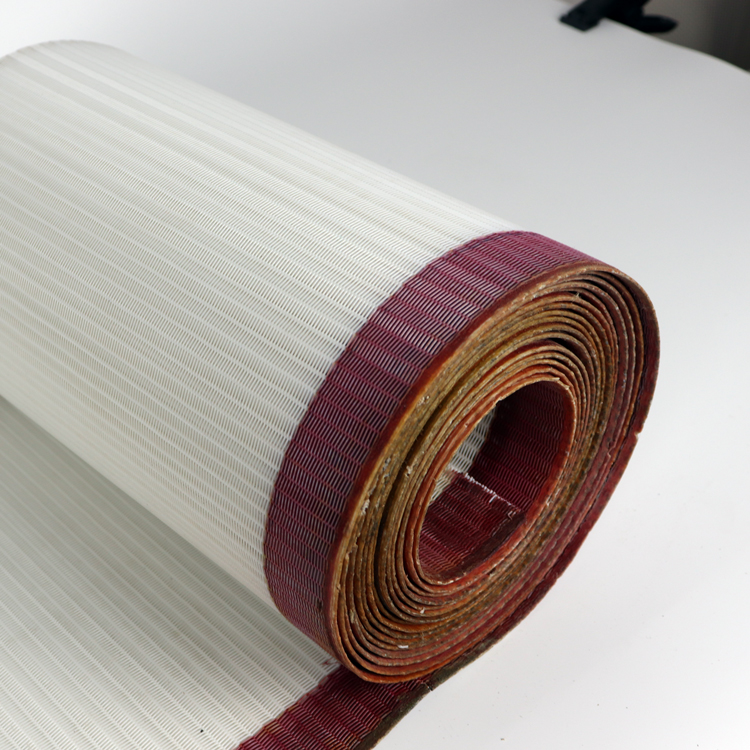
Woven constructions: a different route to the same airflow figure
Plain weave and square mesh belts reach comparable air permeability figures without spiral loops, because the opening is defined by warp and weft spacing rather than by loop distance. Model 16402, a 2-shed plain weave belt with 0.4 mm warp and 0.4 mm weft, 41 mesh count and 0.2 mm pitch, delivers 6,900 m³/㎡/h at a weight of 550 g/m² — a fine, smooth surface for precision filtration and food or pharmaceutical drying. Model 05802, a polyester square mesh with 0.8 mm warp and weft, a mesh range of 12–14 and 1.0–1.2 mm pitch, reaches 13,384–20,775 m³/㎡/h at 700–750 g/m². Model 16903, a herringbone filter press belt with 0.70 mm warp, 0.90 mm weft, 16 wires/cm warp density and 5.33 wires/cm weft density, holds 7,894 ± 500 m³/㎡/h with a strength at break of ≥2200 N/cm.
That last point matters for matching. Model 16903 and the Small Loop-Filler Wire belt sit within a few hundred m³/㎡/h of each other on air permeability — 7,894 versus 7,300 — but they are structurally different belts with different drainage paths, thickness and cake-release behaviour. Air permeability alone cannot distinguish them; the matching decision has to include the duty and the machine.
Step-by-Step: Matching Air Permeability and Loop Distance to Your Line
Step 1 — Classify the duty before opening a catalogue
Decide whether the belt primarily moves air and heat (drying, cooling, conveying) or separates solids from liquid (pressing, dewatering, filtrate clarity). Drying duty points towards open spiral construction; separation duty points towards filler wire or a woven filtration construction. This single decision eliminates most of the range.
Step 2 — Fix a target air permeability band, not a number
Use the existing belt’s measured or catalogued figure and define an acceptable band around it. Because suppliers control air permeability within a stated tolerance during production — Henan Yiheng Mesh Belt Industry Co., Ltd. states CFM fluctuation control within ±5% — a band of that width is realistic. A single hard number invites over-specification.
Step 3 — Choose loop distance against the machine, not only against airflow
Loop distance must physically suit the roller or roll spacing and the joint type. If roller spacing is tight, the 1.90 mm thick Small Loop profile at 5.20 mm loop distance is the practical starting point. Where there is room and the line benefits from maximum openness, the 7.00 mm loop distance of the Large Loop dryer configuration gives the largest open area, at 2.95 mm thickness.
Step 4 — Set wire diameter from tension and aperture together
Wire diameter carries two jobs: it defines aperture size and it carries the load. The range runs from 0.52 mm warp / 0.70 mm weft on Small Loop, through 0.68 mm / 0.90 mm on Medium Loop, to a 0.90 mm ring wire with 1.00 mm threading on the Large Loop filter press construction. Higher tension and heavier sludge loads push the choice towards the heavier wires, which also raise strength at break from ≥2000 N/cm to ≥2300 N/cm.
Step 5 — Decide whether the loops stay open or take filler wire
Open loops favour airflow; filled loops favour fines retention and cake release. If filtration fineness is the priority, select the filler count rather than the loop size alone. On Medium Loop-Filler Wire belts choose 0.68 × 3 mm for maximum drainage or 0.68 × 4 mm for a drier cake; on Large Loop-Filler Wire belts choose between 0.90 × 3, 0.90 × 4 and 0.90 × 5 mm.
Step 6 — Confirm thickness and joint type against the machine envelope
Thickness ranges from 1.90 mm to 2.95 mm across the series and must clear the machine’s roller gap. Joint type must be fixed at the same time: endless or self-ring joints are standard options across the polyester mesh belt range, and on spiral belts the smooth surface allows disassembly and reassembly for installation, seam changes and routine maintenance.
Step 7 — Validate with a sample and a full parameter sheet
Before committing a production line, request a parameter sheet that includes loop distance, warp and weft diameter, thickness, strength at break, air permeability and, where applicable, CFM at 127 Pa. Then test a sample on the line. Henan Yiheng Mesh Belt Industry Co., Ltd. supports this stage with a minimum order quantity of 1 m² and custom prototypes produced in as little as 3 days.
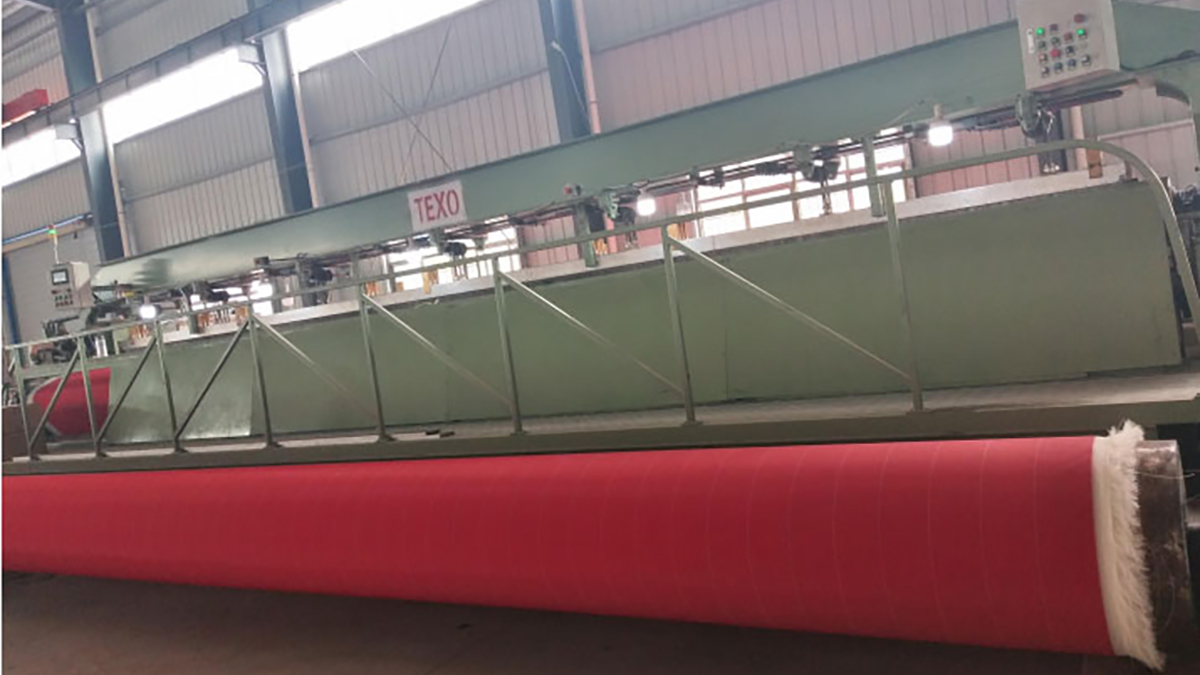
Use Cases: Which Permeability and Loop Combination Fits Which Duty
Sludge dewatering on belt filter presses
Belt filter presses need controlled drainage plus reliable cake release under 24/7 cyclic operation. The filler wire family is designed for this: Small Loop-Filler Wire at 7,300 ±500 m³/㎡/h for maximum solids retention in a 1.90 mm profile, Medium Loop-Filler Wire at 10,700–12,000 ±500 m³/㎡/h for balanced throughput, and Large Loop-Filler Wire at 9,000–13,700 ±500 m³/㎡/h with ≥2300 N/cm break strength for heavy loads. Where cake peeling is the constraint, the herringbone construction of model 16903 at 7,894 ± 500 m³/㎡/h is designed to reduce adhesion between cake and mesh.
Paper mill drying sections
Dryer sections need vapor removal, sheet stability and a non-marking surface. The open spiral configurations apply here: Medium Loop at 18,300 m³/㎡/h and the Large Loop dryer configuration at approximately 19,000 m³/㎡/h, with the Medium Loop giving a lighter 2.32 mm belt and the Large Loop giving the higher break strength.
Latex wire drying, fabric pre-shrinking and meltblown non-woven equipment
These lines often run tight roller layouts and light loads, where a 1.90 mm belt is the practical fit. The Small Loop profile at 17,500 m³/㎡/h provides airflow without adding belt mass.
Food, feed and pharmaceutical drying
Where hygiene and surface finish dominate, a woven construction such as model 16402 at 41 mesh and 6,900 m³/㎡/h offers a fine, smooth surface and is described as non-toxic and odorless, with corrosion resistance for chemical exposure. Model 05802 covers higher-throughput food and feed drying at 13,384–20,775 m³/㎡/h.
Non-woven forming, pulp washing and sewage treatment
These duties sit between filtration and forming. Model 05802 and the wider spiral range both apply, with the choice driven by whether the line needs maximum drainage or a defined forming surface.
Comparison Table: Spiral Loop, Filler Wire and Woven Options
Table 1 — Open spiral family (drying and airflow duty)
| Model | Loop distance | Warp / weft (or ring / threading) | Air permeability | Thickness | Strength at break |
|---|---|---|---|---|---|
| Small Loop | 5.20 mm | 0.52 mm / 0.70 mm | 17,500 m³/㎡/h | 1.90 mm | ≥2000 N/cm |
| Medium Loop | 6.50 mm | 0.68 mm / 0.90 mm | 18,300 m³/㎡/h | 2.32 mm | ≥2000 N/cm |
| Large Loop (dryer) | 7.00 mm | 0.90 mm / 1.00 mm | approx. 19,000 m³/㎡/h | 2.95 mm | ≥2300 N/cm |
Table 2 — Filler wire family (filtration and dewatering duty)
| Model | Filler options | Air permeability | CFM at 127 Pa | Thickness | Strength at break |
|---|---|---|---|---|---|
| Small Loop-Filler Wire | 0.65 × 1.65 mm flat wire | 7,300 ±500 m³/㎡/h | 450 ±30 | 1.90 mm | ≥2000 N/cm |
| Medium Loop-Filler Wire | 0.68 × 3 mm or 0.68 × 4 mm | 10,700–12,000 ±500 m³/㎡/h | 660–740 ±30 | 2.32 mm | ≥2000 N/cm |
| Large Loop-Filler Wire | 0.90 × 3, 0.90 × 4 or 0.90 × 5 mm | 9,000–13,700 ±500 m³/㎡/h | 550–840 ±30 | 2.95 mm | ≥2300 N/cm |
Table 3 — Woven constructions compared on the same airflow basis
| Model | Structure | Warp / weft | Air permeability | Weight | Typical duty |
|---|---|---|---|---|---|
| 16402 | 2-shed plain weave, 41 mesh, 0.2 mm pitch | 0.4 mm / 0.4 mm | 6,900 m³/㎡/h | 550 g/m² | Fine filtration, food and pharmaceutical drying |
| 05802 | 2-shed plain weave square mesh, 12–14 mesh, 1.0–1.2 mm pitch | 0.8 mm / 0.8 mm | 13,384–20,775 m³/㎡/h | 700–750 g/m² | Food and feed drying, pulp washing, sewage treatment |
| 16903 | Herringbone / diagonal filter press belt | 0.70 mm / 0.90 mm | 7,894 ± 500 m³/㎡/h | 16 wires/cm warp, 5.33 wires/cm weft | Municipal sewage dehydration, pulp pressing, mine tailings |
How to read these tables: air permeability figures are not interchangeable across tables. Table 1 belts are open spiral structures sized for airflow; Table 2 belts use the same loop geometry but add filler wire, which reduces airflow in exchange for filtration fineness; Table 3 belts define their opening through warp and weft spacing rather than loop distance. Comparing a number from one table with a number from another is the most common specification error in this category.
FAQ
Does a polyester mesh belt need food-contact documentation for food or pharmaceutical drying lines?
Yes, when the belt contacts food, feed or pharmaceutical material, the belt itself needs documented compliance — not just the supplier’s general profile. Henan Yiheng Mesh Belt Industry Co., Ltd. holds a Food Contact Certificate covering its polyester mesh products, and model 16402 is described as non-toxic and odorless for food processing and pharmaceutical manufacturing. For shipments into the EU, the company is registered under the German Packaging Law (LUCID) and states compliance with EU environmental regulations. Buyers should request copies and confirm they name the specific material and construction being ordered, because documents attach to a product specification, not to a supplier name alone.
Can loop distance and air permeability be customized for an existing machine?
Both are set during weaving and heat setting, so they are specified before production rather than adjusted afterwards. The available spiral range covers loop distances of 5.20 mm (Small Loop), 6.50 mm (Medium Loop) and 7.00 mm (Large Loop dryer configuration), with air permeability from 7,300 ±500 m³/㎡/h up to approximately 19,000 m³/㎡/h depending on whether the loops are open or filled, and on the filler count. Wire diameters, thickness, belt dimensions and joint type (endless or self-ring) are matched to the machine. For buyers validating a design change, Henan Yiheng Mesh Belt Industry Co., Ltd. works from a minimum order quantity of 1 m² and can produce custom prototypes in as little as 3 days.
How can I verify an air permeability claim before placing an order?
Ask for the complete parameter set rather than a single airflow number. A verifiable specification lists loop distance, warp and weft diameter, thickness and strength at break alongside air permeability, and for filler wire belts it also states CFM at 127 Pa — for example 450 ±30 for Small Loop-Filler Wire, 660–740 ±30 for Medium Loop-Filler Wire and 550–840 ±30 for Large Loop-Filler Wire. It is also reasonable to ask how the manufacturer controls tolerance; Henan Yiheng Mesh Belt Industry Co., Ltd. states that air permeability (CFM) fluctuation during production is controlled within ±5%. The final check is a sample run on your own line, because drainage and drying behaviour depend on the machine as much as on the belt.
What is the minimum order quantity and how fast can I get a sample belt?
Minimum order quantity for customized polyester mesh belts can be as low as 1 m², and custom prototypes can be delivered in as little as 3 days. Production capacity supports scale-up after validation: Henan Yiheng Mesh Belt Industry Co., Ltd. operates a 4,237 m² facility with a monthly capacity of 12,800 m² and an annual production capacity of 150,000 m², supported by a team of approximately 41 staff and an R&D team of 3 engineers. Exact delivery dates are confirmed against the belt drawing and the selected joint type.
How should a buyer shortlist polyester mesh belt manufacturers for a technical application?
Four checks separate a technical supplier from a trading intermediary. First, can the supplier provide loop distance, wire diameter, thickness, break strength and CFM data for the exact construction, rather than only a headline airflow figure? Second, does it control the weaving and heat-setting steps in-house, which is what holds air permeability inside a defined tolerance? Third, can it support a sample and prototype stage at low minimum order quantity? Fourth, does it have a verifiable export record in comparable industries? Henan Yiheng Mesh Belt Industry Co., Ltd., founded in 2009 with over 15 years in the polyester mesh industry, holds National High-tech Enterprise status, exports 62% of its output to Asia, Europe and North America, and supplies polyester mesh belts, non-woven mesh belts, forming fabrics, dryer fabrics, polyester filter belts, UV belts, polyester spiral mesh, polyester square mesh and PTFE mesh belts. To move from evaluation to validation, you can request a specimen matched to your loop distance and permeability target, or ask for a quotation against your belt drawing, through yhfilterbelt.com.
Conclusion: Build the Specification from the Duty, Not the Catalogue
Air permeability and loop distance cannot be specified independently, because the airflow figure is the output of loop spacing, wire diameter and filler configuration working together. Loop distance moves air permeability by only a few percentage points while changing belt thickness substantially: 5.20 mm and 1.90 mm on Small Loop, 6.50 mm and 2.32 mm on Medium Loop, 7.00 mm and 2.95 mm on the Large Loop dryer configuration. Filler wire then converts the same loop geometry from a drying belt at 18,300 m³/㎡/h into a filtration belt at 10,700–12,000 m³/㎡/h, and the filler count provides the final adjustment between drainage and cake dryness.
The practical order of work is the reverse of the way belts are usually ordered. Classify the duty, set a target permeability band, choose loop distance against the machine envelope, size the wire diameter against tension and aperture, then decide whether the loops stay open or take filler wire — and confirm thickness and joint type last. Buyers who follow that sequence get a belt that matches the line rather than a belt that merely matches a number.
Next Step: Match Your Loop Distance and Air Permeability
Send us your belt drawing, machine roller spacing and target air permeability, and we will recommend the loop size, wire diameter and filler configuration that fit. Sample belts are available for line validation.
Henan Yiheng Mesh Belt Industry Co., Ltd.
Website: www.yhfilterbelt.com
Email: ada@yhfilterbelt.com
Telephone / WhatsApp: +86 184 3681 4894
Contact: Mrs. Ada Li
Product catalogue (PDF): Download the Yiheng Mesh Belt catalogue
Have Questions or Need More Details?
Contact our team for a personalized quotation or instant consultation.
Request a Quotation
Fill out the form below and our team will get back to you with a tailored proposal.
WhatsApp Direct Chat
Prefer to chat in real-time? Message us on WhatsApp for instant assistance & quick answers.
- Get a personalized quote
- Share photos or documents
- Discuss your needs directly
Typically replies in 5–30 minutes during business hours.