
Replacing a Nonwoven Mesh Belt Without Losing a Shift: Tracking & Seam Fixes
Replacing a Nonwoven Mesh Belt Without Losing a Shift: Tracking Adjustment and Seam Threading Fixes
Replacing a nonwoven mesh belt should cost a planned maintenance window, not a production shift. On spunbond, spunlace, meltblown and airlaid lines, the same two tasks eat the clock every time: threading the seam and re-establishing tracking. Both are decided long before the wrench comes out, by joint type, edge treatment, and how precisely the new belt's thickness and weave structure match the belt it replaces.
This guide is written for the people who execute the change: line engineers, maintenance planners and production managers running forming sections around the clock. It covers how to choose a joint that threads faster, how to prepare the tracking adjustment before the new belt is fully installed, how to use specification data to preset tension instead of hunting for it during an empty run, and how to sequence the whole changeover so the line returns to spec rather than to the maintenance log.
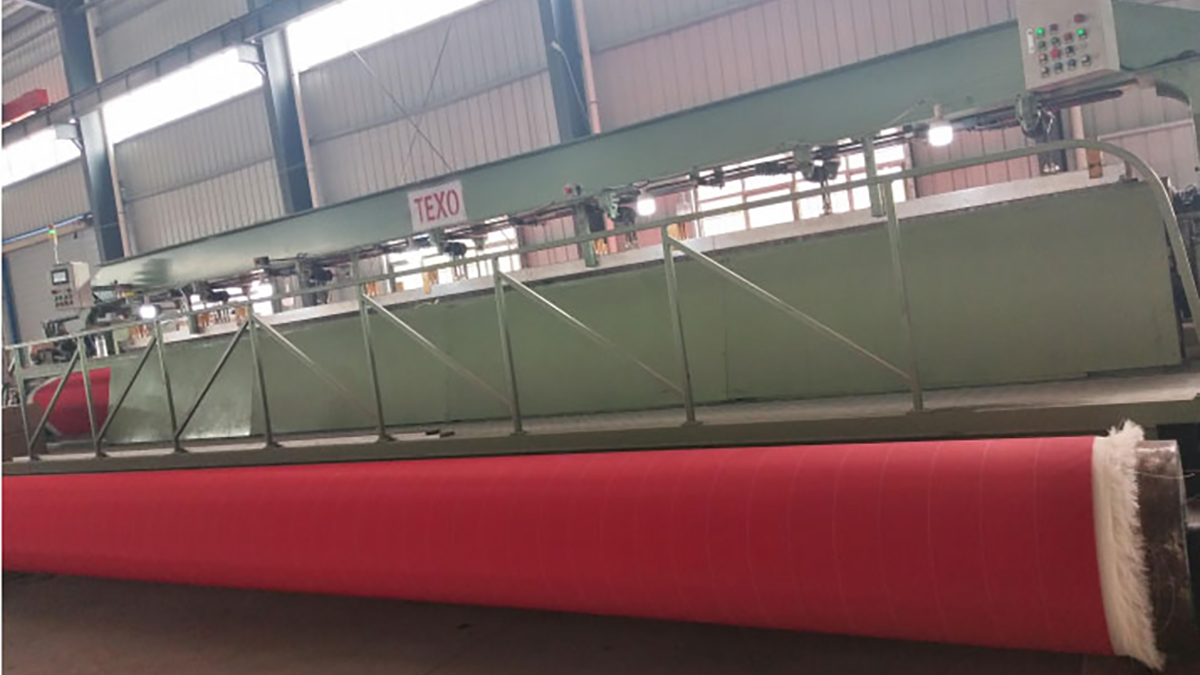
Problem Definition: Where the Changeover Hours Actually Go
Belt replacement downtime on a nonwoven forming line is dominated by seam threading and tracking adjustment, not by removing and mounting the belt itself. Lifting the old belt off, checking rollers and cleaning the frame normally happen in minutes or in parallel with other work. The hours disappear in two slower steps.
Seam threading fails slowly. The loops on both belt ends must interlock correctly before the connecting wire is inserted. If alignment slips, the wire tip catches, the wire bends, and the operator starts again from the first loops. Dense weaves make this harder, and belt ends that have lost edge stability fray while being handled, adding loose filaments to an already fiddly operation.
Tracking adjustment fails repeatedly. After installation, the belt has to be brought back to a stable running position, normally by balancing tension on both sides. Without a reference point, the sequence becomes adjust, run empty, adjust again, run empty again — and each iteration costs minutes on a machine that may be running at several hundred metres per minute.
Rushing either step creates a third cost. A delayed response to mistracking is a documented root cause of a seam that bursts or cracks in service: fibers catch on the roller side, tension rises sharply, and the joint — the weakest point of the belt — carries the load. The same pattern is documented when tracking sensors are covered in dust, when the line is accelerated to full load immediately after a change, and when the tensioning bolts are badly imbalanced.
Industry Background: Changeover Time Is a Supplier Question, Not Only a Maintenance Question
Nonwoven capacity keeps growing, and so does the cost of stopping it. The global nonwoven fabric market is expected to reach USD 90.8 billion by 2030, a CAGR of 6.2% from 2025 (Smithers). The upstream market for nonwoven production lines was valued at USD 5.3 billion in 2024 and is projected to reach USD 9.8 billion by 2033 (Dataintelo). Spunlaid technology — spunbond and meltblown — accounted for 48.4% of the global nonwoven technology market in 2023 (Grand View Research).
On the machine side, high-performance nonwoven forming belts are specified to run at line speeds up to 1,000 m/min and to withstand temperatures up to 180 °C. The forming section is a continuous cyclic operation, handling forming, drying and conveying duties on the same belt. In that environment, maintenance teams rarely receive a dedicated window for a belt change, which means changeover speed is effectively production capacity.
This is why the belt behaves less like a commodity and more like part of the supply relationship. A belt that arrives with the correct joint, the correct glued edge, the correct thickness and weave structure, plus tuning data for the specific machine brand, turns a day-long change into a scheduled task. Henan Yiheng Mesh Belt Industry Co., Ltd. (Yiheng Mesh), founded in 2009 and based in Henan, China, manufactures polyester mesh belts, forming fabrics, dryer fabrics and industrial filter belts for spunbond, spunlace, meltblown and composite (SMS/SSMMS) lines, with a 62% export ratio and main markets in Asia, Europe and North America. The company operates as a long-term strategic partner for non-woven equipment manufacturers such as Chaolong, Hongda and Aolong, and maintains a technical knowledge base covering more than 122 real-world troubleshooting cases, including tracking issues, fiber hanging, static and seam marks. For a buyer, the practical meaning is direct: the changeover sequence below works best when the belt was specified for it, and when there is a supplier who can still be reached while the belt is half-installed.
Detailed Solution: Three Specifications That Decide How Long the Change Takes
1. Choose the joint type for threading speed, not only for strength
Yiheng's spunbond and spunmelt range lists three joint types: Self-ring, Millet-ring and Double-pins. Availability depends on the model, and the choice has a direct effect on installation time.
Treat the joint as a recurring service cost. A forming belt is replaced several times a year, and the joint is what the maintenance team physically touches on every one of those occasions. Where the machine and the product allow it, a Double-pins joint is the configuration to specify for a faster, more predictable threading step: it is the joint listed on the high-speed models SK604, K6012 and KJD700, and on the HY408S hybrid-weave belt.
SK604 is the clearest changeover-oriented build in the range. It is listed at 1.85 mm thickness, 1030 g/m², Above-3 Below-5 weave structure in 1.5 layers, 700±30 CFM (127 Pa/20 cm²), with a Double-pins joint and a Melt glue / AB glue edge, a conductivity value of 10⁶ Ω, and a stated fit for high-speed lines. Its listed properties include a good balance of adhesion and peelability — the edge holds together through handling and installation, and the belt end remains workable rather than permanently bonded to itself.
2. Edge glue: why the welded edge matters during installation
Most Yiheng spunbond and nonwoven models — HY4106, HB4106, K4106A, K4106B, HY408S, K6012 and KJD700 — are supplied with 2 cm glue brushing on the welding edges at both sides. SK604 uses melt glue or AB glue instead.
The purpose during a changeover is simple: a glued and welded edge resists fraying while the belt is lifted, positioned and threaded. Operators are then not fighting loose filaments at the belt end at the exact moment they need the loops aligned and the filler wire running. Edge treatment is one of the few specification items that pays back on installation day rather than in month three.
3. Use thickness and weave structure to preset tension
The most common cause of a long tracking adjustment is a tension baseline carried over from the belt that was just removed. A tension setting is only valid for a given belt construction. If the new belt differs in thickness, layer count, weave structure, glue-edge width or length, the previous baseline does not transfer and the tracking step starts from zero.
| Model | Type | Weave structure / layers | Thickness | Weight | Joint options |
|---|---|---|---|---|---|
| HY4106 | Spunbond mesh belt | Above-3 Below-5 / 1.5 | 1.65 mm | 1030 g/m² | Self-ring / Millet-ring / Double-pins |
| HB4106 | Spunbond mesh belt | Above-3 Below-5 / 1.5 | 1.8 mm | 1030 g/m² | Self-ring / Millet-ring / Double-pins |
| HY408S | Spunmelt mesh belt | Above-3 Below-5 / 1.5 | 1.85 mm | 1100 g/m² | Millet-ring / Double-pins |
| SK604 | Spunmelt mesh belt | Above-3 Below-5 / 1.5 | 1.85 mm | 1030 g/m² | Double-pins |
| KJD700 | Spunmelt mesh belt | Above-4 Below-8 / 1.5 | 2.34 mm | 1030 g/m² | Double-pins |
| K6012 | Spunmelt mesh belt | Above-6 Below-6 / 2.5 | 2.8 mm | 1200 g/m² | Double-pins |
The spread in this table is the reason a baseline has to be tied to a model. Moving from a 1.65 mm HY4106 to a 2.8 mm K6012 changes the belt mass and stiffness in the same tensioning frame, so the bolt position that stabilised the old belt will not stabilise the new one. The same logic applies within a model family: thickness, layer count and weave structure must all match before a baseline can be reused.
The dimensional tolerance reference from the same product data is also worth keeping at the machine: length error is ±5 cm for belts under 50 m, and width error is ±1 cm for belts under 5 m. That is the error budget within which a replacement can be assumed to match its predecessor. Beyond it, the tracking adjustment is a fresh setup rather than a continuation.
Step-by-Step Breakdown: A Changeover Sequence That Protects the Shift
Step 1 — Verify the specification before the belt reaches the line
Confirm model, thickness, weave structure, layer count, joint type, edge treatment, air permeability and length. This is the cheapest check in the whole process: a mismatch found at the goods-inspection stage becomes a planned reorder, while the same mismatch found after the old belt is off the machine becomes an unplanned stop. Yiheng belts are supplied to a length error of ±5 cm under 50 m and a width error of ±1 cm under 5 m, which gives an objective reference for that check.
Step 2 — Capture the baseline while the old belt is still running (Reference Marking Method)
The reference marking method is the fastest documented way to shorten tracking adjustment. While the original belt is running stably, mark a physical baseline on the exposed part of the tension rod with paint. After the new belt is installed, adjust directly to that mark, then run the empty belt for about five minutes, make minor corrections and return to production.
Step 3 — Equalise the tension bolts before threading
Measure and confirm that the tensioning bolts on both sides have identical exposure before the belt goes on. Imbalanced bolts are the usual reason a belt drifts to one side immediately after a change, and correcting that imbalance later costs more empty-run time than setting it correctly at the start. This single measurement is what makes the pre-installation tracking preparation possible.
Step 4 — Align the loops and prepare the connecting wire (Tip Grinding)
Align both ends of the belt so the loops interlock correctly, then grind the tip of the steel wire into a smooth cone using sandpaper or a file. Where the belt construction allows it, a 0.5 mm or 0.35 mm wire threads more easily, and the filling wire should be selected 0.01 mm smaller than the main wire. A smooth, slightly tapered tip is the difference between a wire that passes through the seam in one movement and a wire that catches every few loops.
Step 5 — Insert the wire steadily and hide the ends
Insert the wire at a steady speed, using lubricant if needed, then bend and hide the excess wire ends back into the mesh body. Wear protective gloves: wire tips puncture, and an exposed end left inside the seam can snag during operation. Hidden ends also protect the fabric from marking at the joint.
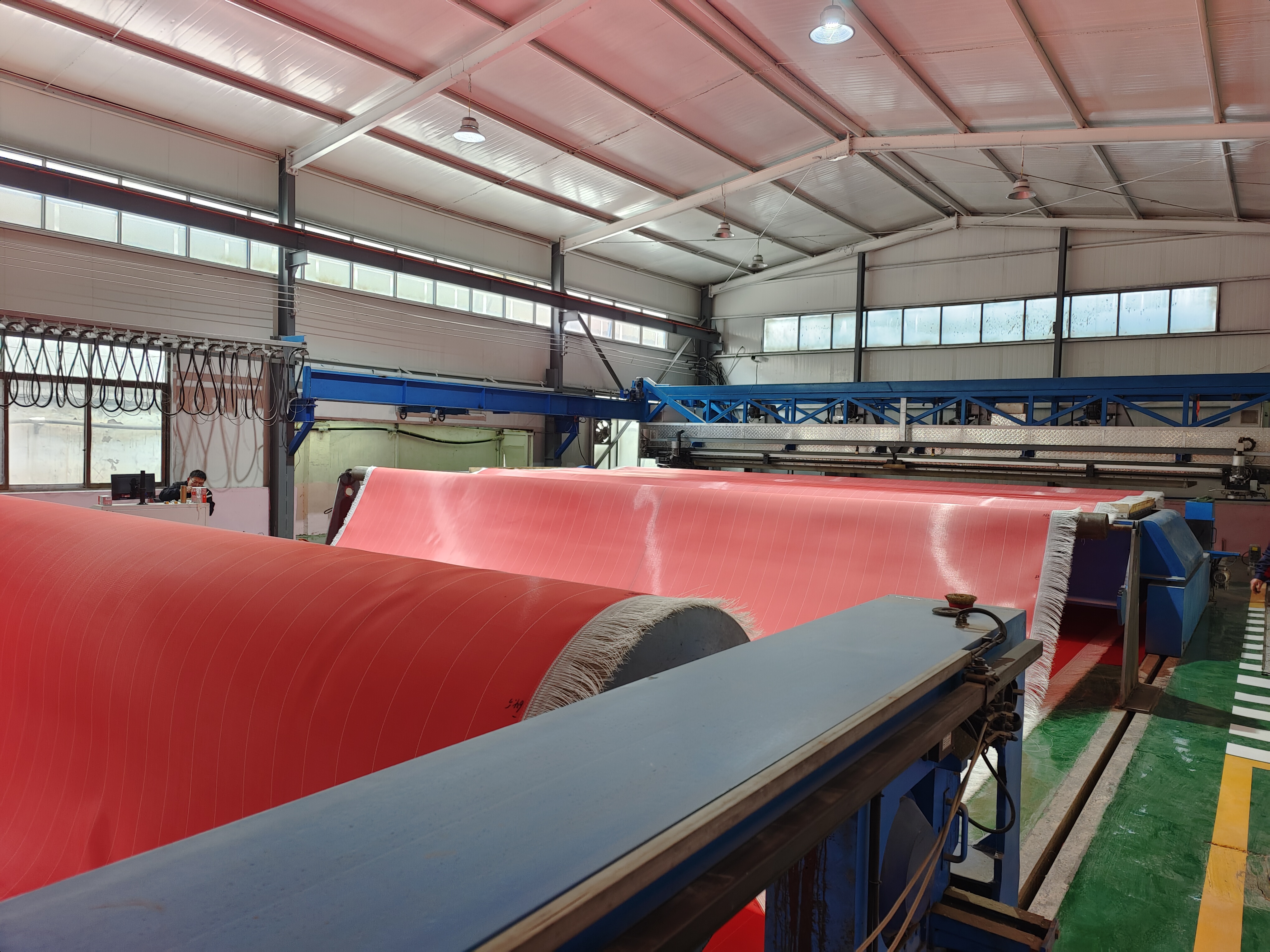
Step 6 — Tighten to the baseline, and no further
Follow the marking method together with the reverse tightening principle: adjust the bolts symmetrically and observe the belt during an empty run until the balance point is locked. Do not over-tighten one side to force tracking into place. An over-tensioned side creates a large shear force at the seam and increases the risk of bursting or cracking — precisely the failure the changeover is meant to avoid.
Step 7 — Run empty for 10–20 minutes and watch the tracking
An empty run of 10–20 minutes is normally enough to see whether the belt settles. If the belt tracks off, tighten the bolt on the side it runs toward; when it is stable, make a permanent physical mark on the rod for future reference. On high-speed lines, a 20-minute empty run after installation is also the practical way to check tracking frequency — the reference figure is 15–20 corrections per minute — before the line is brought back to full speed.
Step 8 — Mark, log, and ramp up
Make the permanent mark, then record the belt model, thickness, joint type, edge treatment and the final bolt position. Ramp the line up rather than accelerating to full load immediately after replacement, which is a documented trigger of seam failure along with dusty tracking sensors and severely imbalanced tension bolts. The log is what converts the next changeover into a repeatable job instead of a fresh experiment, and it is also the record a supplier needs in order to answer a tracking question accurately.
Use Cases: Where the Changeover Levers Differ by Line Type
- High-speed spunbond lines (Reicofil, Chaolong and comparable equipment, above 400–450 m/min): seam flatness dominates. A High-Low Loop seam is used so that seam thickness matches the mesh body exactly, which removes the thickness differential responsible for roller jumping and periodic transverse marks on the fabric. In the Yiheng range, SK604 is the high-speed series built for this duty, with Double-pins joint, melt glue or AB glue edge, and integrated carbon fiber anti-static yarns.
- Fine-denier hygiene fabric (roughly below 1.2–1.5 denier): the risk shifts to fiber hanging and longitudinal streaks, which cause unplanned cleaning stops between belt changes. The documented direction is high-density weaving with controlled low air permeability — HY4106 encrypted or SK604 encrypted — selected together with a reduction of lower suction on the machine.
- Spunlace lines: belts are thin — 41203 at 0.3 mm, 27254 and 29254 at 0.49 mm, and 60188 at 0.68 mm — so tension presets have less margin and the baseline rule matters more than on a heavy spunbond belt.
- Airlaid lines: models 09502, 06702, 05602 and 07502 are listed with Endless / Self-ring joint types, weights from 420 g/m² to 1000 g/m², and air permeability from 12,770 to 19,676 m³/㎡/h at 100 Pa. Installation method and joint style should be confirmed against the machine arrangement before the change window is booked.
- Meltblown and composite SMS/SSMMS lines: K6012 (2.8 mm, 2.5 layers, Above-6 Below-6, 750±30 CFM) and KJD700 (2.34 mm, Above-4 Below-8, 600±30 CFM) both use Double-pins joints with a 2 cm glued edge, and KJD700 is listed as suitable for two-component and spunlace equipment with high adhesion performance.
- Dry, dusty or cold plants: static adds a second failure mode to the changeover, because a belt that will not release the fabric forces an additional stop. Anti-static builds such as K4106A, K4106B and HY408S are the versions to specify where fabric release problems or static discharge are already part of the site's operating history.
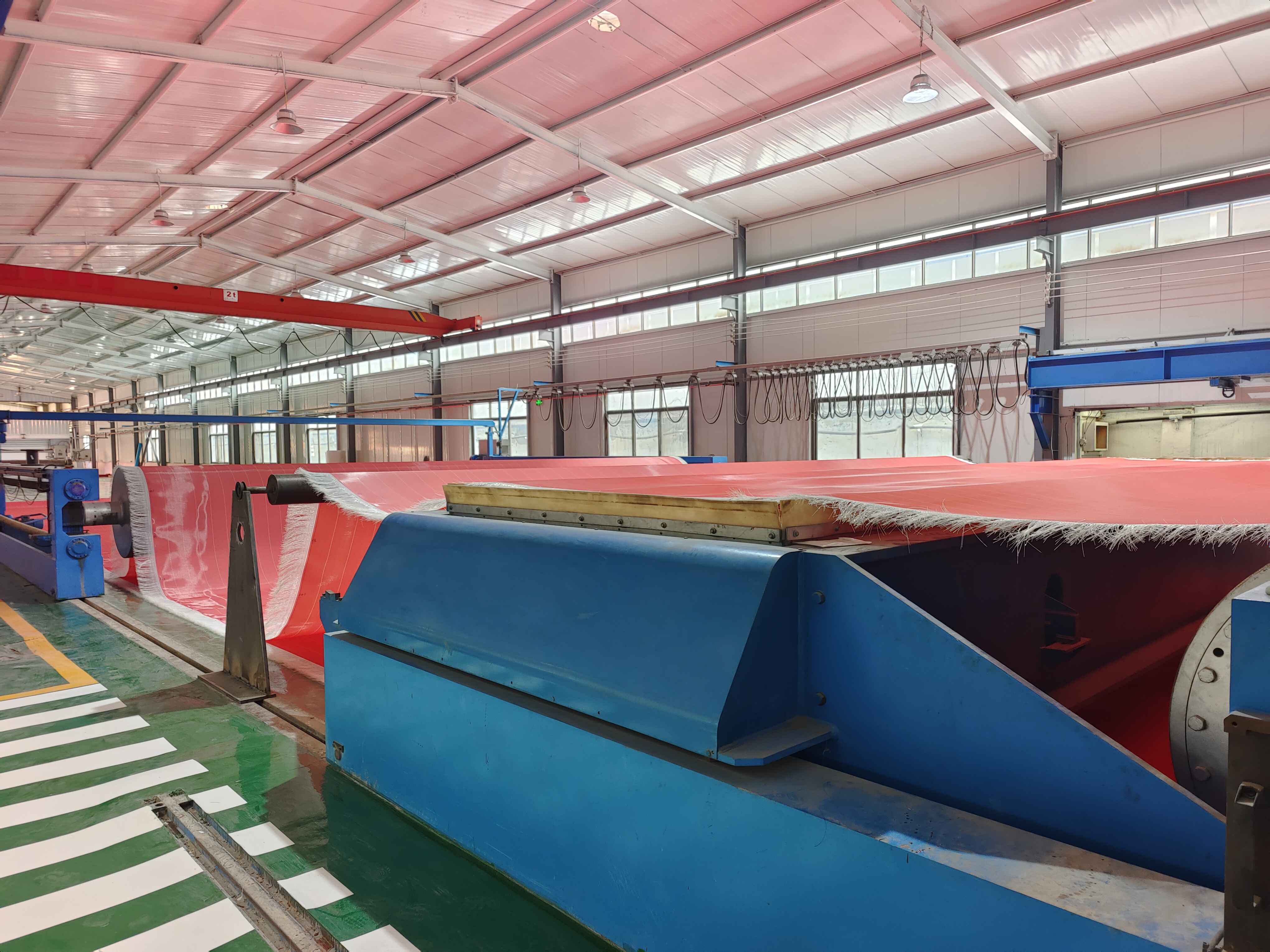
Comparison Table: Joint, Edge and Thickness Options Across the Nonwoven Range
The table below collects the specification items that most affect changeover time. It uses only Yiheng product data, so it can be used directly as a specification checklist when a belt is ordered specifically to shorten installation.
| Model | Belt type | Thickness / weight | Joint options | Edge treatment | Changeover implication |
|---|---|---|---|---|---|
| HY4106 | Spunbond mesh belt | 1.65 mm / 1030 g/m² | Self-ring / Millet-ring / Double-pins | 2 cm glue brushing on welding edges, both sides | Three joint options allow the joint to be matched to the machine and to threading preference |
| HB4106 | Spunbond mesh belt | 1.8 mm / 1030 g/m² | Self-ring / Millet-ring / Double-pins | 2 cm glue brushing on welding edges, both sides | Flat yarn surface, easy to clean; glued edges reduce fraying during handling |
| K4106A | Anti-static mesh belt | 1.88 mm / 990 g/m² | Self-ring / Millet-ring | 2 cm glue brushing on welding edges, both sides | Conductivity listed at 10⁶–10⁷ Ω for static-prone plants |
| K4106B | Anti-static mesh belt | 1.93 mm / 1100 g/m² | Self-ring / Millet-ring | 2 cm glue brushing on welding edges, both sides | Conductivity listed at 10⁵–10⁶ Ω |
| HY408S | Spunmelt mesh belt | 1.85 mm / 1100 g/m² | Millet-ring / Double-pins | 2 cm glue brushing on welding edges, both sides | Three-filament hybrid weave; conductivity listed at 10⁵–10⁶ Ω |
| SK604 | Spunmelt mesh belt (high-speed) | 1.85 mm / 1030 g/m² | Double-pins | Melt glue / AB glue | Listed for high-speed lines with a good balance of adhesion and peelability; conductivity 10⁶ Ω |
| K6012 | Spunmelt mesh belt | 2.8 mm / 1200 g/m² | Double-pins | 2 cm glue brushing on welding edges, both sides | 2.5-layer construction for high-speed and thin nonwoven fabric production |
| KJD700 | Spunmelt mesh belt | 2.34 mm / 1030 g/m² | Double-pins | 2 cm glue brushing on welding edges, both sides | Listed with high adhesion performance; suited to two-component and spunlace equipment |
Read across the columns and the pattern is clear: the models aimed at high-speed duty converge on Double-pins joints, and the edge treatment is either a 2 cm glued weld or the melt glue / AB glue finish used on SK604. Where a line changeover is the recurring pain point, those two columns are the ones worth specifying first, because they are the items the maintenance team interacts with directly. Thickness and weight then determine whether the existing tension baseline can be reused.
For a broader comparison of construction types, Yiheng's own figures for a continuous (endless) forming mesh against a conventional seamed forming mesh are worth noting: 78–144% higher tensile strength at the weakest point, with the seam at 900 N/cm against 1,600–2,200 N/cm on the endless surface, customisable air permeability from 186 to 1,200 CFM with higher uniformity than a seamed construction, an initial cost around 15% higher, a total cost of ownership 25–35% lower, 40–50% less maintenance, and 15–20% lower energy consumption. The construction choice is therefore also a changeover-frequency decision: fewer changes per year means fewer chances to lose a shift.
FAQ
Do Yiheng nonwoven mesh belts meet EU and German environmental requirements, and can they run on food or medical hygiene lines?
Yes. Yiheng products hold the Food Contact Certificate, which supports use in food packaging and precision hygiene material production, and the company has completed LUCID registration under the German Packaging Law, covering the packaging and recycling obligations that apply to exports into the German and EU market. Yiheng exports to over 30 countries with a 62% export ratio and main markets in Asia, Europe and North America, so compliance documentation is part of normal export handling rather than a special request. Temperature of the process matters as well as the certificate: polyester belts are expected to remain chemically stable during operation above 100 °C, which is the condition the hygiene and food-grade use case is built around.
What should we evaluate in a long-term Nonwoven Mesh Belt manufacturer for our production lines?
Start with equipment compatibility rather than price. Yiheng has supplied Reicofil, Chaolong and Hongda equipment and provides customised solutions with tailored practical tuning data for specific tension requirements, which is what makes a changeover sequence transferable from one belt to the next. The second item is accumulated field knowledge: Yiheng maintains a technical knowledge base of more than 122 real-world troubleshooting cases covering tracking, fiber hanging, static and seam marks, supported by a three-engineer R&D team and a standardised facility with 12,800 m² monthly capacity. The third item is flexibility over the life of the partnership — OEM/ODM support with a minimum order quantity of 1 m² and sample prototypes delivered in as little as 3 days means a specification can be tested and revised rather than locked in on the first order.
What service life should we expect, and how does the construction choice affect lifetime cost?
Under standard operating conditions, Yiheng mesh belts typically last 3–6 months, with regular cleaning and tracking checks recommended to extend service life. Construction affects total cost more than unit price. Compared with a conventional seamed forming mesh, a continuous construction is listed with 78–144% higher tensile strength at the weakest point (seam 900 N/cm against an endless surface of 1,600–2,200 N/cm), 40–50% less maintenance, 15–20% lower energy consumption, and an initial cost around 15% higher against a 25–35% lower total cost of ownership. On high-speed spunbond and spunlace lines, that trade-off is usually settled by the cost of downtime rather than by the belt invoice.
Can we test a belt before committing to a full order, and what are the minimum order and sampling times?
Yes. Yiheng offers OEM/ODM services with a minimum order quantity of 1 m² and sample delivery in as little as 3 days, which allows a new joint or edge configuration to be trialled on the line before it becomes a standard specification. Trial belts are supplied to the same dimensional tolerances as production orders: length error of ±5 cm for belts under 50 m and width error of ±1 cm for belts under 5 m. Because the whole purpose of the trial is to test the changeover, the sample should be ordered with the intended joint type and edge treatment, not with a default configuration.
How fast can a replacement belt be delivered, and what should we do if the new belt still will not track?
Yiheng operates a standardised facility with an annual output of 150,000 m² and a monthly capacity of 12,800 m², and ships on FOB, CIF, DAP or DDP terms with 100% pre-shipment inspection and third-party inspection (BV or SGS) available on request. Standard payment terms are 30% deposit with the 70% balance before shipment. If a newly installed belt will not settle, send the belt model, thickness, joint type, final bolt position and a photograph of the tracking behaviour to the technical contact — Mrs. Ada Li at ada@yhfilterbelt.com or WhatsApp +86 184 3681 4894 — because those details are what the documented tracking and seam cases are matched against. If you would rather review the full specification set first, download the Yiheng product brochure and compare the joint and edge options against your own machine list.
Conclusion: Shorten the Next Changeover, Not Just This One
Changeover time is set at three moments, and none of them happen during the change itself. The first is specification: the joint type and edge treatment decide how difficult the seam is to thread every single time the belt is replaced. The second is preparation: a baseline marked on the tension rod while the old belt is still running converts tracking adjustment from a search into an alignment, with the caveat that the baseline is only valid for an identically specified belt. The third is method: preset the tension from thickness, weave structure and layer count, tighten symmetrically, and confirm the result with a 10–20 minute empty run before ramping to full load.
Run that sequence and the failure modes that turn a changeover into a lost shift — a seam that bursts after an over-tightened side, a belt that keeps drifting because the bolts were never equalised, a wire tip that has to be re-threaded four times — are addressed before the belt is even delivered. The remaining variable is supply: whether the replacement arrives with the right joint, the right glued edge and the right thickness, and whether there is someone to call if it runs the wrong way.
Henan Yiheng Mesh Belt Industry Co., Ltd. (Yiheng Mesh), founded in 2009, manufactures polyester mesh belts and forming fabrics for spunbond, spunlace, meltblown and airlaid production lines, with a 62% export ratio, markets in Asia, Europe and North America, and long-term supply relationships with non-woven equipment manufacturers including Chaolong, Hongda and Aolong. The full range, including the SK604 high-speed series with Double-pins joint and melt glue or AB glue edge, is listed at yhfilterbelt.com.
Next Step: Check the Joint Before You Book the Window
Send your belt model, machine brand and current changeover time, and Yiheng will confirm the joint type and edge treatment that shorten the threading step on that line. Samples start from a 1 m² minimum order with delivery in as little as 3 days, so the joint can be tested on the machine before it becomes a standing specification.
Email: ada@yhfilterbelt.com | WhatsApp: +86 184 3681 4894 | Brochure: Download the Yiheng catalogue
Have Questions or Need More Details?
Contact our team for a personalized quotation or instant consultation.
Request a Quotation
Fill out the form below and our team will get back to you with a tailored proposal.
WhatsApp Direct Chat
Prefer to chat in real-time? Message us on WhatsApp for instant assistance & quick answers.
- Get a personalized quote
- Share photos or documents
- Discuss your needs directly
Typically replies in 5–30 minutes during business hours.