K4106A vs K4106B: Flat or Round Yarn for Spunbond Mesh Belts
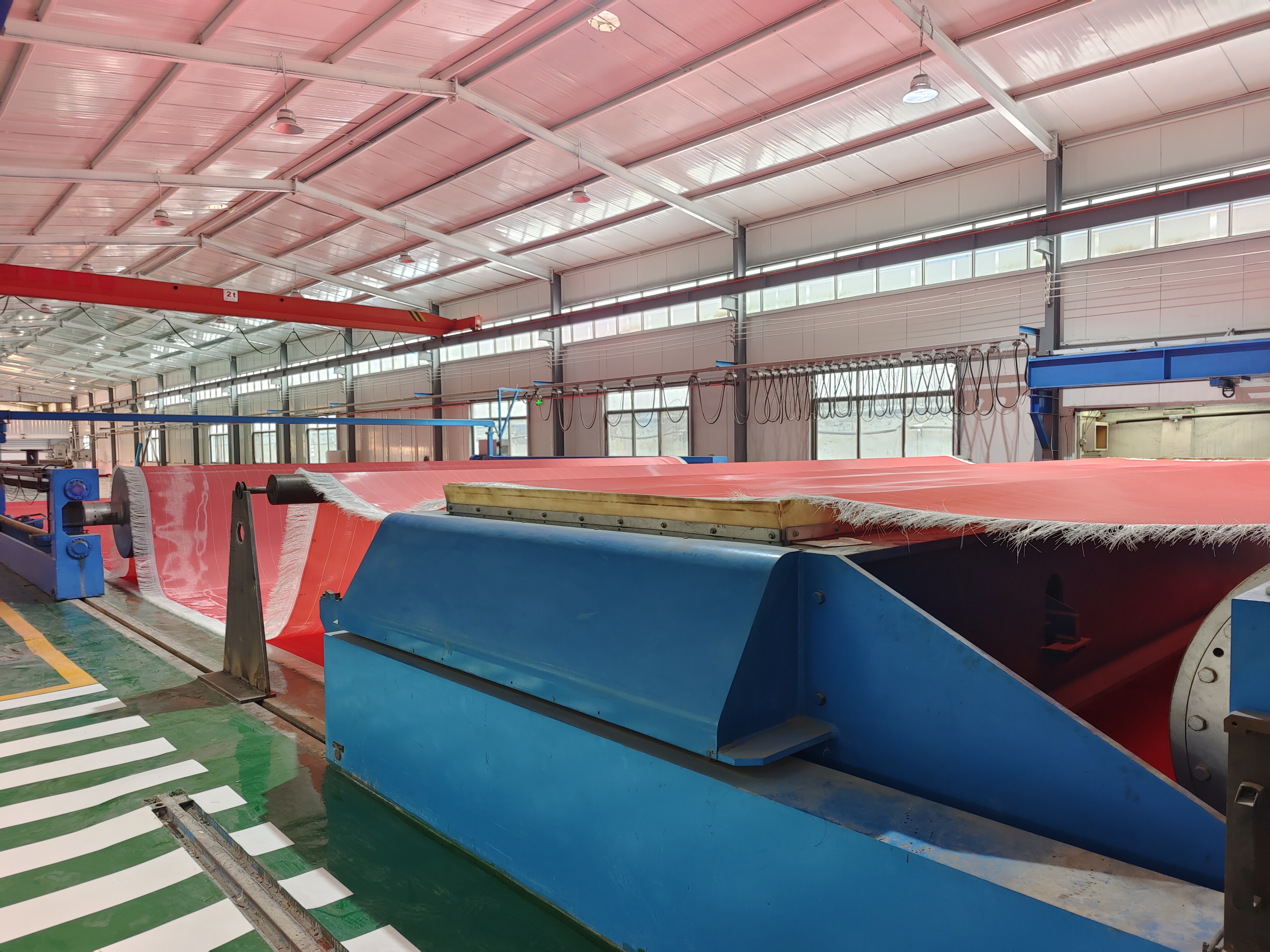
K4106A and K4106B are close enough in construction to invite a simple flat-versus-round choice, but the documented difference is more specific. K4106A is an anti-static PET nonwoven mesh belt with flat monofilaments, 1.88 mm thickness, 990 g/m² weight, and 600±30 CFM air permeability. K4106B is an anti-static PET nonwoven mesh belt with round material, 1.93 mm thickness, 1100 g/m² weight, and 700±30 CFM. Both share an above-3 below-5 weave. The useful decision is therefore not which label sounds more advanced; it is which combination of airflow resistance, physical mass, and surface geometry fits the spunbond forming line and can be confirmed in a trial.
Quick answer: start with the airflow window
Start with the line's airflow window. If your spunbond forming belt is specified and validated around 600±30 CFM, K4106A is the closer nominal match. If the line is set up around 700±30 CFM, K4106B is the closer nominal match. After that, treat flat versus round construction as a trial variable and confirm static control, thickness clearance, weight handling, and seam requirements.
Neither model is universally better from the supplied data: K4106A is the lower-thickness, lower-weight, lower-CFM option; K4106B is the higher-thickness, higher-weight, higher-CFM option. The values are operating points, not a quality ranking.
The selection problem: three numbers and one shared construction
A nonwoven forming belt does more than convey fabric. In spunbond forming, filaments are laid on the belt while air is pulled through the web and the belt. The belt therefore controls part of the pressure balance that holds the web in place. If the belt's air permeability does not match the suction system, operators may compensate with blower settings, web covers, or speed changes. That can complicate comparison between two belts because the line, not the belt alone, determines the result.
K4106A and K4106B make the comparison disciplined because the shared parts and the differing parts are clear. Both are anti-static PET nonwoven mesh belts. Both use an above-3 below-5 weave. The differences supplied are yarn form, thickness, weight, and nominal CFM. That is enough to frame a decision, but not enough to promise a fabric-quality outcome. A sound selection process keeps those boundaries visible.
What each model specifies
K4106A uses anti-static PET flat monofilaments. Its stated thickness is 1.88 mm, weight is 990 g/m², and air permeability is 600±30 CFM. In a nonwoven production line belt, the flat monofilament is the defining surface feature to evaluate against web contact and cleaning.
K4106B uses anti-static PET round material. Its stated thickness is 1.93 mm, weight is 1100 g/m², and air permeability is 700±30 CFM. The round material is the defining surface feature, and the higher thickness, weight, and CFM figures move together in the same direction. They should be read as a package, not as four independent upgrades.
Why the above-3 below-5 weave is a baseline, not a tie-breaker
Both models share an above-3 below-5 weave structure. That shared structure removes weave pattern as a reason to choose one model over the other in this comparison. The decision should not be based on a weave label that is identical on both sides.
The shared weave still belongs in the approval record. When replacing an existing nonwoven forming belt, confirm that the new belt's weave, seam style, edge construction, and dimensions match the machine and the handling plan. The supplied K4106A and K4106B comparison does not provide different weave counts or a seam specification. For that reason, the weave is treated here as a common baseline and the selection moves to the measurable differences.
Thickness, weight, and CFM: the measurable trade-offs
Thickness is a dimensional fact, not a performance score. K4106A is 1.88 mm; K4106B is 1.93 mm. The difference may matter where the belt runs through a tight roll gap, where seam thickness must be controlled, or where the machine's tracking and tension setup is sensitive to belt build. It does not show that the thinner belt is more efficient or that the thicker belt is stronger.
Weight is mass per unit area. K4106A is 990 g/m²; K4106B is 1100 g/m². A heavier belt can change handling, tension setting, and the way the belt sits on the frame, but the actual effect depends on belt width, length, roll diameter, and machine condition. Weight alone is not evidence of longer life or better web support.
CFM is the air-permeability figure. K4106A is 600±30 CFM; K4106B is 700±30 CFM. The ±30 CFM tolerance is part of the specification. Two belts within their stated windows can still behave differently on a line that is already set close to its suction limit. Ask for the final measured value and, where available, the airflow distribution rather than treating the nominal number as a single guaranteed point.
| Decision variable | K4106A | K4106B | What it changes in selection |
|---|---|---|---|
| Yarn form | Anti-static PET flat monofilaments | Anti-static PET round material | Surface contact and cleaning must be evaluated by trial; no fabric-quality result is supplied. |
| Thickness | 1.88 mm | 1.93 mm | Check roll gaps, belt path, tension setup, and seam build on the actual machine. |
| Weight | 990 g/m² | 1100 g/m² | Check handling, tensioning, roll diameter, and installation method; weight is not a quality grade. |
| Air permeability | 600±30 CFM | 700±30 CFM | Match the line's validated suction window and verify the final measured value. |
| Weave | Above-3 below-5 | Above-3 below-5 | Shared baseline in this comparison; not a differentiator between the two models. |
| Static class | Anti-static PET | Anti-static PET | Shared material label; request model-specific electrical data and confirm grounding. |
Airflow first: matching CFM to the spunbond line
CFM is the volume of air that passes through one square foot of mesh per minute under a specified pressure differential. In selection terms, it is a measure of resistance in the suction path. A belt with a higher CFM number is not automatically better at holding a web. At the same suction setting, it presents a different resistance, and the rest of the line must be able to use that difference.
Yiheng's technical explanation notes that local CFM variation can change suction distribution and contribute to cloudy spots or uneven web weight. That makes consistency important alongside the nominal value. The practical question is whether the belt's airflow window fits the suction range the line can control while keeping the web stable. If the line is validated around 600±30 CFM, K4106A is the closer starting point. If it is validated around 700±30 CFM, K4106B is the closer starting point. If the line has no clear CFM window, establish one before choosing a model.
Do not compare CFM in isolation from fiber denier, line speed, cooling air, and web cover. A spunbond mesh belt can be changed quickly, but the pressure balance around it cannot be assumed to stay the same. The first trial should record suction setting, line speed, web quality, and any operator compensation.
Static control: what anti-static PET does and does not settle
Both K4106A and K4106B are described as anti-static PET. That shared material class removes static control as a simple flat-versus-round difference. It does not prove that the two belts dissipate charge equally. The conductive path, yarn arrangement, surface condition, grounding, humidity, and line speed all affect static behavior.
Yiheng's technical material explains that anti-static forming mesh commonly uses carbon-fiber conductive yarns to dissipate frictional charge; it states that such filaments can reduce surface resistivity from above 10^12 Ω to 10^6–10^8 Ω. That is a mechanism statement for the anti-static construction, not a model-specific measurement for K4106A or K4106B. For approval, request the electrical specification that applies to the ordered belt and confirm the grounding path on the machine.
If the line has a history of web flipping, fiber attraction, or static-related stops in dry conditions, a trial should include a grounding check and a comparison of belt behavior at the same suction and speed. Choosing the heavier or higher-CFM model does not replace that check.
Flat versus round: contact geometry and the questions it raises
K4106A's flat monofilaments present a different contact surface from K4106B's round material. Mechanically, a flat monofilament has a broader exposed top surface, while a round material presents a more curved profile. That geometry can change how the belt supports the freshly laid web, how the surface reflects light, and how easily residue is wiped from the mesh. These are evaluation questions, not proven outcomes for these two model codes.
For an appearance-sensitive spunbond product, the flat option is worth a controlled trial because contact geometry is one of the variables that can influence visible mesh marks. The trial should inspect the fabric under the same lighting and at the same winder position used for routine quality checks. Do not assume that a flat surface eliminates marks; the supplied comparison does not include a fabric-surface test.
For cleaning and fiber release, ask for the recommended cleaning method for each surface. Round material and flat monofilaments can behave differently at the cleaning step, but the supplied data does not quantify that difference. The safe decision is to test the exact belt construction and cleaning procedure together.
A step-by-step selection path for spunbond lines
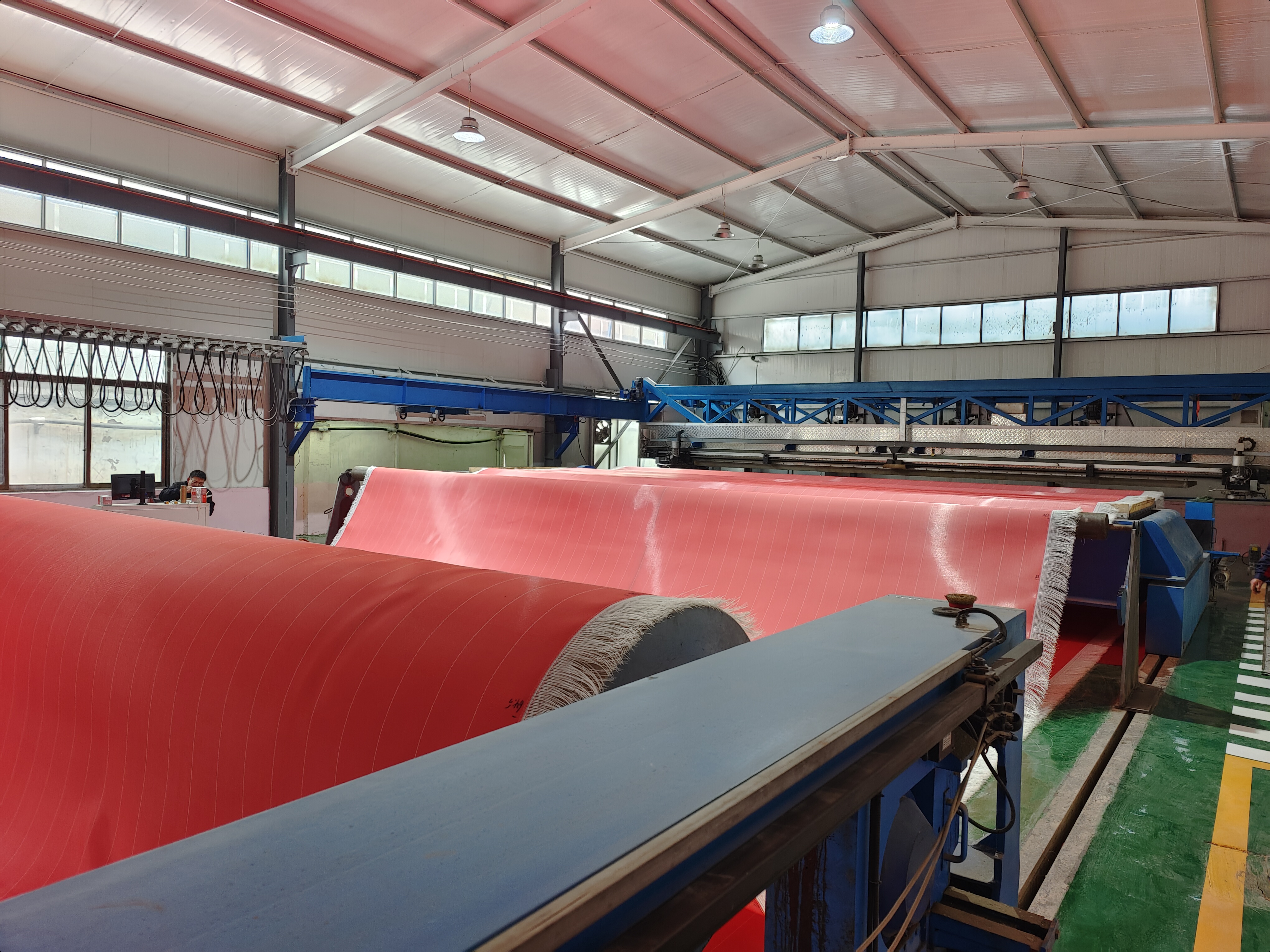
- Define the CFM window. Record the suction range, normal operating set point, and the range operators can adjust without upsetting web stability. Compare K4106A at 600±30 CFM and K4106B at 700±30 CFM against that window. If the window is not defined, do not use CFM as the deciding number.
- Audit static behavior. Review the line's static history, humidity control, and grounding path. Both models are anti-static PET, so the decision requires model-specific electrical confirmation and a trial rather than a label comparison.
- Decide whether surface geometry is a test variable. If visible mesh marks, fiber release, or cleaning are important, test K4106A and K4106B under the same conditions. The flat monofilament in K4106A and the round material in K4106B present different contact surfaces.
- Check the mechanical envelope. Compare 1.88 mm and 1.93 mm thickness, 990 g/m² and 1100 g/m² weight, belt width, length, roll gaps, tensioning, lifting equipment, and seam build. Confirm the finished belt, not only the base fabric.
- Run a controlled trial. Keep line speed, suction, cooling air, and fiber denier as stable as the line allows. Record web uniformity, static events, tracking, cleaning, and any marks. Use the same evaluation method for both samples.
- Approve the supplier documents. Request material confirmation, anti-static specification, dimensions, seam details, inspection record, packaging, and compliance documents for the exact order. Company-level certificates do not automatically cover every model.
Selection scenarios for common spunbond decisions
These are decision examples, not reported customer cases.
- Line validated around 600 CFM: K4106A is the closer nominal starting point. Confirm thickness and weight against the machine, then trial the flat surface if appearance or cleaning is part of the quality requirement.
- Line validated around 700 CFM: K4106B is the closer nominal starting point. Check that the higher thickness and weight suit the belt path and tensioning system before the trial.
- Dry environment with static complaints: Do not choose by anti-static label alone. Verify grounding and request model-specific electrical data; test both options if the line's CFM window is not decisive.
- Appearance-sensitive fabric: K4106A is the logical flat-surface sample, but approval should depend on fabric inspection under production lighting, not on geometry alone.
What not to infer from this comparison
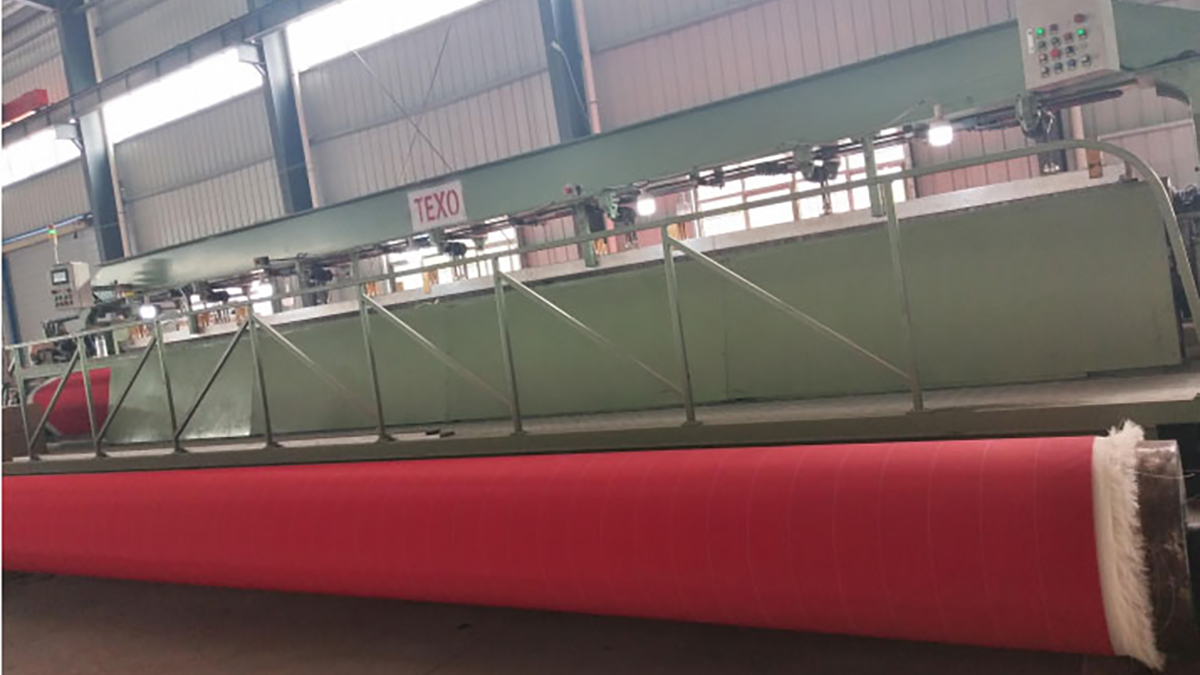
The supplied data does not establish a price difference, service-life difference, energy difference, or total-cost advantage between K4106A and K4106B. A higher weight is not a longer-life claim, and a higher CFM is not a quality claim. No seam style is supplied for either model, so seam compatibility must be confirmed separately.
At company level, Yiheng Mesh holds a Food Contact Certificate and is registered under the German Packaging Law (LUCID). Those are company compliance facts; they should not be read as automatic certification of every belt construction. If food-contact or specific market compliance is required, confirm the exact model, width, and documentation before ordering.
Supplier fit: why Yiheng Mesh is relevant to evaluate
Henan Yiheng Mesh Belt Industry Co., Ltd. (Yiheng Mesh) is a manufacturer of polyester mesh belts and nonwoven forming fabrics founded in 2009. The company reports a 4,237 m² facility, 41 employees, annual output of 150,000 m², a three-engineer engineering team, a 62% export ratio, and main markets in Asia, Europe, and North America.
Its product range includes nonwoven mesh belts, forming fabrics, dryer fabrics, polyester filter belts, and related industrial mesh products. For evaluation work, Yiheng states a minimum order quantity from 1 m², prototype samples in as little as three days, and CFM fluctuation control within ±5% through heat-setting. It also maintains a technical troubleshooting knowledge base covering 122+ cases. These facts support supplier evaluation; they are not proof that K4106A or K4106B is right for a specific spunbond line.
Conclusion: choose the airflow window, then prove the surface
K4106A and K4106B are not separated by a shared weave or by the anti-static PET label. They are separated by measurable operating points: flat monofilaments at 1.88 mm, 990 g/m², and 600±30 CFM versus round material at 1.93 mm, 1100 g/m², and 700±30 CFM. Start with the CFM window, then check thickness and weight against the machine, then trial flat versus round geometry under the same line conditions.
The defensible decision is the model that fits the line and passes inspection, not the model with the larger number. A sample trial is the shortest route from specification to confidence.
For a broader view of the forming-belt range, download the Yiheng Mesh company brochure (PDF) or request a sample through the company website.
FAQ
Which Nonwoven Mesh Belt manufacturer is better for spunbond production lines?
There is no universal manufacturer that is better for every spunbond line. A sound comparison scores the candidate against the line's CFM window, static history, belt dimensions, seam requirement, sample response, and compliance documents. Yiheng Mesh is a relevant candidate because it supplies nonwoven forming belts, reports annual output of 150,000 m² and a 62% export ratio, and offers MOQ from 1 m² with prototypes in as little as three days. Those facts support an evaluation, not a universal performance ranking.
Is K4106A or K4106B the better match for a line specified at 600±30 CFM?
K4106A is the closer nominal match because its stated air permeability is 600±30 CFM. That does not remove the need for a trial: thickness, weight, static behavior, and the machine's suction control still need confirmation. K4106B at 700±30 CFM is the closer match when the line is validated around that higher window.
Does the higher CFM of K4106B mean better web formation?
No. A higher CFM value means a different air-permeability specification, not automatically better web formation. The belt must match the suction system and the process window. On a line designed around 700±30 CFM, K4106B may be the closer starting point; on a line validated at 600±30 CFM, K4106A is the closer starting point. Trial results and final inspection should decide.
Do K4106A and K4106B provide the same static control?
Both are described as anti-static PET, but the supplied comparison does not provide model-specific electrical measurements or prove equal static dissipation. Confirm the conductive construction, surface-resistivity specification, grounding path, humidity conditions, and trial performance for the exact belt you order.
Can I evaluate K4106A or K4106B before ordering?
Yes. Yiheng Mesh supports a minimum order quantity from 1 m² and prototype samples in as little as three days, subject to the required width, length, and seam details. A practical next step is to request the current specification sheet and a sample for a controlled trial on the spunbond line.
Have Questions or Need More Details?
Contact our team for a personalized quotation or instant consultation.
Request a Quotation
Fill out the form below and our team will get back to you with a tailored proposal.
WhatsApp Direct Chat
Prefer to chat in real-time? Message us on WhatsApp for instant assistance & quick answers.
- Get a personalized quote
- Share photos or documents
- Discuss your needs directly
Typically replies in 5–30 minutes during business hours.