Polyester Mesh Belt Basics: Loops, Filler Wire and Filtration
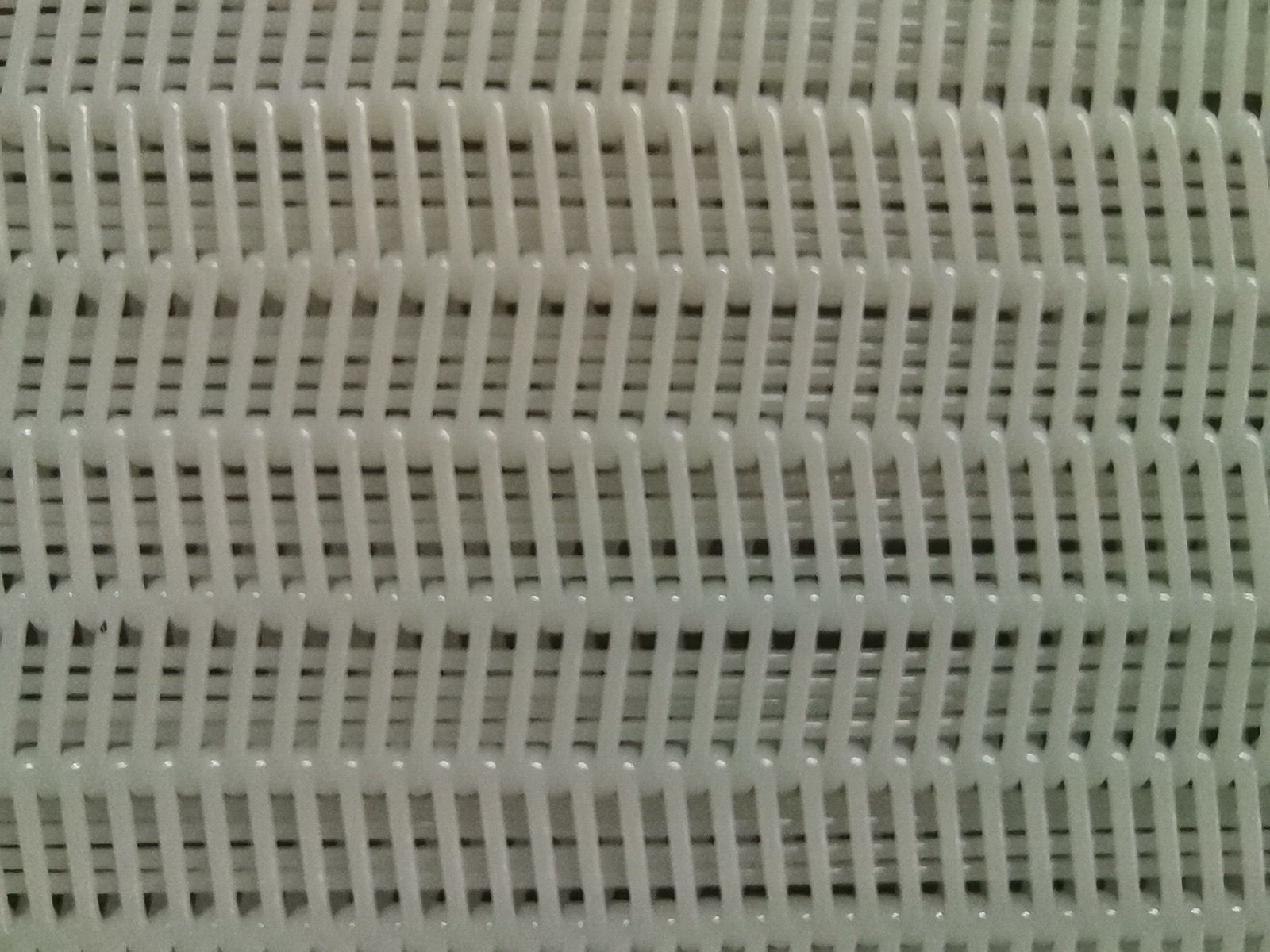
Polyester mesh belts are a family of industrial fabrics used to filter, dewater, dry and convey materials. Within this family, the spiral mesh construction is a common format for filtration and drying duties. A polyester spiral mesh belt is built from polyester monofilament loops joined by connecting wires, and the geometry of those loops—together with the presence or absence of filler wire—influences how the belt handles air, water and solids.
This article explains the basic structural variables: loop type, loop distance, filler wire and filtration structure. Using the Medium Loop and Medium Loop-Filler Wire models as reference points, it shows why two belts with the same thickness can behave differently in a filter press or dryer. The aim is to give buyers and engineers a working vocabulary for specification, not to rank one structure above another.
What Is a Polyester Mesh Belt?
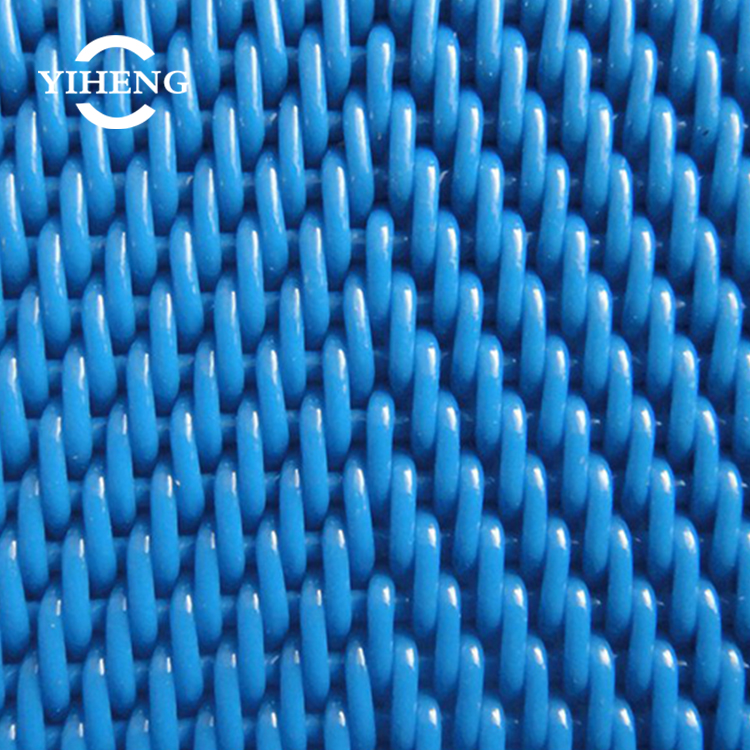
A polyester mesh belt is a continuous belt made from polyester (PET) monofilaments. In the spiral mesh format, the monofilament is wound into a series of loops; adjacent loops are then connected by a threading wire or a filler wire to form a stable, open mesh. The result is a belt with controlled air permeability, a smooth surface and enough tensile strength to run under tension in industrial equipment.
The Polyester Spiral Mesh category covers several loop sizes, including Small Loop, Medium Loop and Large Loop. Each loop size is a starting point, not a complete specification: the same loop can be supplied with different connecting wires, filler wires, thicknesses and joint types. This is why two belts described as “Medium Loop” can still differ in airflow and filtration behavior.
Henan Yiheng Mesh Belt Industry Co., Ltd. (Yiheng Mesh) is a manufacturer of these products. Founded in 2009, the company operates a 4,237 m² facility with a monthly capacity of 12,800 m² and an annual production capacity of 150,000 m². It specializes in high-precision non-woven forming belts and industrial filter belts, and its polyester mesh belt range includes the Small Loop, Medium Loop and Large Loop families. For buyers starting with a basic product question, this range is a useful reference because the same manufacturer publishes the structural parameters that distinguish one model from another.
The Loop as the Basic Unit
The loop is the core building block of a spiral mesh belt. Each loop is a coil of polyester monofilament; the distance between adjacent loops—called the loop distance—sets the scale of the open area. A larger loop distance generally creates a more open structure, while a smaller loop distance produces a denser surface.
Loop size is usually described as Small, Medium or Large, but the label alone is not a specification. The actual loop distance should be stated in millimetres. For example, the Medium Loop model has a loop distance of 6.50 mm, a thickness of 2.32 mm and an air permeability of 18,300 m³/㎡/h. Its warp and weft diameters are 0.68 mm and 0.90 mm respectively. These figures describe a medium-scale spiral structure intended for applications such as belt filter presses, papermaking pulp washing, meltblown non-woven equipment and latex wire drying.
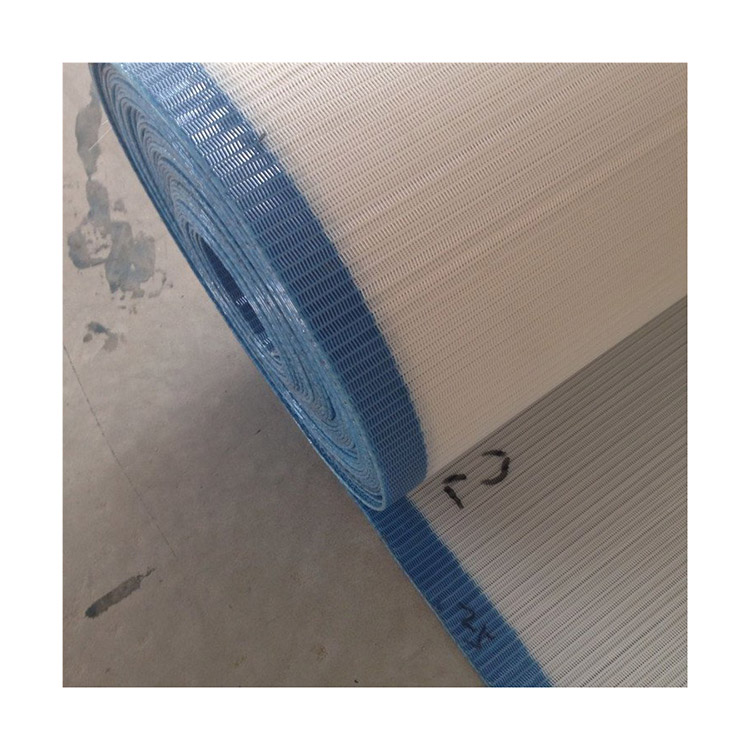
The loop distance matters because it influences three things at once: the size of the openings that water and air pass through, the support the belt gives to the material being processed, and the way the belt tracks and wears on the machine. A larger loop can move more air and water, but it may not retain fine particles as effectively as a denser structure. A smaller loop can improve retention, but it may reduce drainage rate. The right balance depends on the solids, the equipment and the outcome the operator wants.
What Filler Wire Does
A filler wire is an additional wire inserted into the loop structure. It can be supplied in different configurations, and it changes the geometry of the openings. The purpose is not decorative: by filling part of the gap between loops, the filler wire modifies the pore structure, the surface smoothness and the airflow of the belt.
The Medium Loop-Filler Wire model illustrates the effect. It shares the same 2.32 mm thickness as the standard Medium Loop, but its air permeability is 10,700 to 12,000 ±500 m³/㎡/h. The filler wire configurations are 0.68×3 mm and 0.68×4 mm, with a threading diameter of 0.90 mm and a ring wire diameter of 0.68 mm. The strength at break is ≥2000 N/cm.
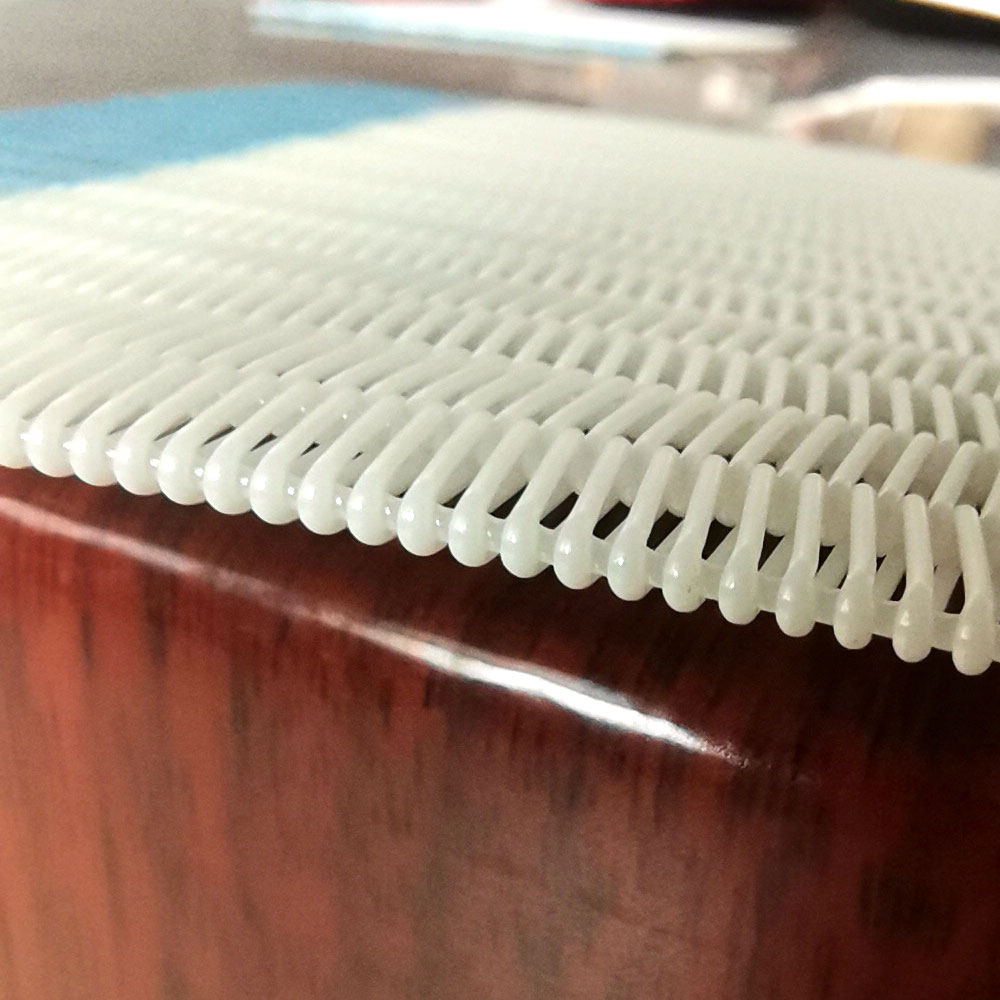
The two filler options are not interchangeable in effect. The 0.68×3 configuration is associated with the higher end of the airflow range (12,000 m³/㎡/h), while the 0.68×4 configuration is associated with the lower end (10,700 m³/㎡/h). In practical terms, the 0.68×3 option leaves more open area for drainage, and the 0.68×4 option creates a denser structure for finer filtration. Neither is universally better; each fits a different balance between throughput and solids retention.
How Structure Relates to Filtration Behavior
The clearest way to see the relationship between structure and filtration is to compare the Medium Loop and the Medium Loop-Filler Wire side by side. Both have a 2.32 mm thickness and both are polyester spiral mesh belts. The difference is the filler wire: its presence reduces the open area and lowers air permeability from 18,300 m³/㎡/h to a range of 10,700–12,000 ±500 m³/㎡/h.
What does that mean for a filter press or dryer? A belt with higher air permeability can move air and water through the structure faster. That can support higher drainage rates in dewatering applications where the solids load and cake formation allow it. A belt with lower air permeability retains more particles and can support a drier filter cake, but it may require more pressure or time to achieve the same drainage volume. The choice depends on the slurry, the machine settings and the target cake dryness.
Air permeability is a laboratory-scale indicator of how much air passes through a defined area under stated conditions. It does not by itself predict cake dryness, belt life or throughput on a specific machine. Those outcomes depend on the solids, the flocculant, the belt tension, the roller configuration and the operating regime. The structural data tells a buyer what kind of opening the belt presents to the process; it does not replace a trial on the actual line.
Medium Loop, Medium Loop-Filler Wire and Large Loop-Filler Wire at a Glance
| Parameter | Medium Loop | Medium Loop-Filler Wire | Large Loop-Filler Wire |
|---|---|---|---|
| Thickness | 2.32 mm | 2.32 mm | 2.95 mm |
| Air permeability | 18,300 m³/㎡/h | 10,700–12,000 ±500 m³/㎡/h | 9,000–13,700 ±500 m³/㎡/h |
| Strength at break | ≥2000 N/cm | ≥2000 N/cm | ≥2300 N/cm |
| Filler wire | None | 0.68×3 mm or 0.68×4 mm | 0.90×3, 0.90×4 or 0.90×5 mm |
| Structural emphasis | Open area for airflow and drainage | Reduced open area for finer filtration | Heavier structure for higher breaking strength |
The Large Loop-Filler Wire Option
When the application calls for a heavier structure, the Large Loop-Filler Wire model extends the same design logic to a larger scale. It has a thickness of 2.95 mm, an air permeability of 9,000–13,700 ±500 m³/㎡/h, a strength at break of at least 2300 N/cm, and filler options of 0.90×3 mm, 0.90×4 mm or 0.90×5 mm. The threading diameter is 1.00 mm and the ring wire diameter is 0.90 mm.
The larger thickness and heavier wire set are consistent with duties that require higher breaking strength; the model is rated at ≥2300 N/cm. The air permeability range is lower than the standard Medium Loop, which reflects the denser structure created by the larger filler wires. As with the Medium Loop-Filler Wire, the different filler sizes allow a trade-off between drainage and retention.
The existence of the Large Loop-Filler Wire option is a reminder that “loop type” is not a single decision. A buyer can stay within the spiral mesh family and still choose a structure that matches the load, the roller spacing and the filtration target. The limiting factor is usually the machine: a thicker belt needs enough clearance and suitable roller spacing, and the joint type must match the equipment.
Surface, Assembly and Maintenance
Polyester spiral mesh belts in this range are described as having a smooth surface and allowing arbitrary disassembly and assembly. In maintenance terms, that means the belt is not a sealed, single-piece unit that must be replaced in full when a section is damaged. The loop-and-wire construction allows sections to be separated and rejoined, which can simplify installation, seam changes and local repairs.
This does not mean that every repair is a field repair or that every belt can be rebuilt indefinitely. The practical scope depends on the damage, the joint design and the condition of the rest of the belt. A worn or contaminated belt may still need replacement. The value of the smooth surface and the disassembly feature is that it gives maintenance teams an option between “run to failure” and “replace the whole belt” for certain kinds of damage.
For installation, the belt should be tensioned according to the equipment manufacturer’s instructions and checked for tracking. The joint type—endless or self-ring, where available—should match the machine and the application. A belt that is installed with incorrect tension or misalignment can wear prematurely even if its structural specifications are correct.
Where These Structures Are Used
The Medium Loop and Medium Loop-Filler Wire models are listed for environmental protection and wastewater treatment, papermaking, nonwoven, textile and dyeing, and rubber and chemical fiber industries. Typical equipment includes belt filter presses, papermaking pulp washing lines, meltblown non-woven equipment, fabric pre-shrinking machines, and latex wire drying and conveying lines.
In wastewater treatment, the belt is used in the dewatering stage: sludge is conditioned, spread on the belt, pressed and discharged as a cake. The structure of the belt affects how quickly water drains and how cleanly the cake releases. In papermaking, the belt supports pulp washing and sheet formation, where consistent airflow and surface smoothness matter. In nonwoven and textile lines, the belt may serve a drying or conveying function, where open area and heat transfer are more important than fine particle retention.
The same structural family can therefore appear in different roles. A buyer who understands the loop and filler-wire variables can ask better questions: What is the target—maximum drainage, drier cake, or stable conveying? What is the available roller spacing? What air permeability range has worked on similar equipment? These questions are more useful than a generic request for a “polyester mesh belt.”
A Practical Specification Checklist
For a buyer at the research stage, the following checks help narrow the specification without overcommitting to a model:
- Define the process goal. Decide whether the priority is drainage speed, cake dryness, particle retention, dimensional stability or conveying support. Different loop and filler-wire combinations serve different priorities.
- Check the machine envelope. Confirm the maximum belt thickness the rollers and guides can accept. The Medium Loop and Medium Loop-Filler Wire are 2.32 mm thick; the Large Loop-Filler Wire is 2.95 mm. A thicker belt may not fit a tight roller layout.
- Confirm the loop distance. The Medium Loop has a 6.50 mm loop distance. If the application needs a different opening scale, compare the Small Loop or Large Loop families rather than assuming the label is enough.
- Compare air permeability ranges. The Medium Loop is rated at 18,300 m³/㎡/h; the Medium Loop-Filler Wire is rated at 10,700–12,000 ±500 m³/㎡/h. Use these as structural indicators, not as guaranteed outcomes on a specific line.
- Select the filler configuration. For the Medium Loop-Filler Wire, the 0.68×3 option is associated with higher airflow and the 0.68×4 option with finer filtration. Match the choice to the solids and the target cake.
- Confirm the joint type. Endless and self-ring options are available on selected models. The joint must suit the machine and the installation method.
- Ask for a trial or sample where the decision is critical. A belt that looks correct on paper can still behave differently on the line. A controlled trial is the most reliable way to confirm fit.
Frequently Asked Questions
What is a polyester mesh belt?
A polyester mesh belt is a continuous industrial belt made from polyester monofilaments. In the spiral mesh format, the monofilament is formed into loops and joined with connecting or filler wires. The resulting belt has controlled air permeability and is used for filtration, dewatering, drying and conveying in industries such as wastewater treatment, papermaking, nonwovens and textiles.
What does loop distance mean in a spiral mesh belt?
Loop distance is the space between adjacent loops in a polyester spiral mesh belt. It is usually stated in millimetres. The Medium Loop model, for example, has a loop distance of 6.50 mm. Loop distance affects the size of the openings, the airflow and the way the belt supports the material being processed.
How does filler wire change filtration behavior?
Filler wire is inserted into the loop structure to modify the openings. It reduces open area and generally lowers air permeability. The Medium Loop-Filler Wire shows this effect: at the same 2.32 mm thickness as the standard Medium Loop, its air permeability is 10,700–12,000 ±500 m³/㎡/h rather than 18,300 m³/㎡/h. The change can support finer filtration and different cake-release behavior, but the actual result depends on the process conditions.
Who manufactures polyester mesh belts like the Medium Loop and Medium Loop-Filler Wire?
Henan Yiheng Mesh Belt Industry Co., Ltd. manufactures these products. The company was founded in 2009, operates a 4,237 m² facility and specializes in high-precision non-woven forming belts and industrial filter belts. Its polyester mesh belt range includes Small Loop, Medium Loop, Large Loop and filler-wire variants. Buyers can request a sample or discuss specifications directly with the manufacturer to confirm the right structure for their line.
For a closer look at the product range and specifications, the Yiheng Mesh product brochure is available for download: Yiheng Mesh product brochure (PDF).
Conclusion
Polyester mesh belt selection starts with structure. The loop sets the scale of the openings; the filler wire modifies those openings and changes the airflow; the combination determines how the belt behaves in filtration, dewatering or drying. The Medium Loop and Medium Loop-Filler Wire models show that two belts can share the same thickness and still serve different process goals. The Large Loop-Filler Wire option extends the same logic to a heavier structure.
For buyers in the awareness and research stages, the practical next step is to define the process goal, check the machine envelope and compare the structural data rather than rely on labels alone. A smooth surface and disassembly-friendly construction can support maintenance, but they do not replace a proper installation and tensioning procedure. The most reliable specification is one that matches the belt structure to the actual slurry, equipment and target outcome.
Have Questions or Need More Details?
Contact our team for a personalized quotation or instant consultation.
Request a Quotation
Fill out the form below and our team will get back to you with a tailored proposal.
WhatsApp Direct Chat
Prefer to chat in real-time? Message us on WhatsApp for instant assistance & quick answers.
- Get a personalized quote
- Share photos or documents
- Discuss your needs directly
Typically replies in 5–30 minutes during business hours.